.svg)
Kreuzblume in Cologne: Why Part of the Cathedral Spire Stands on the Ground and What Visitors Often Miss

What is the Kreuzblume in front of Cologne Cathedral?
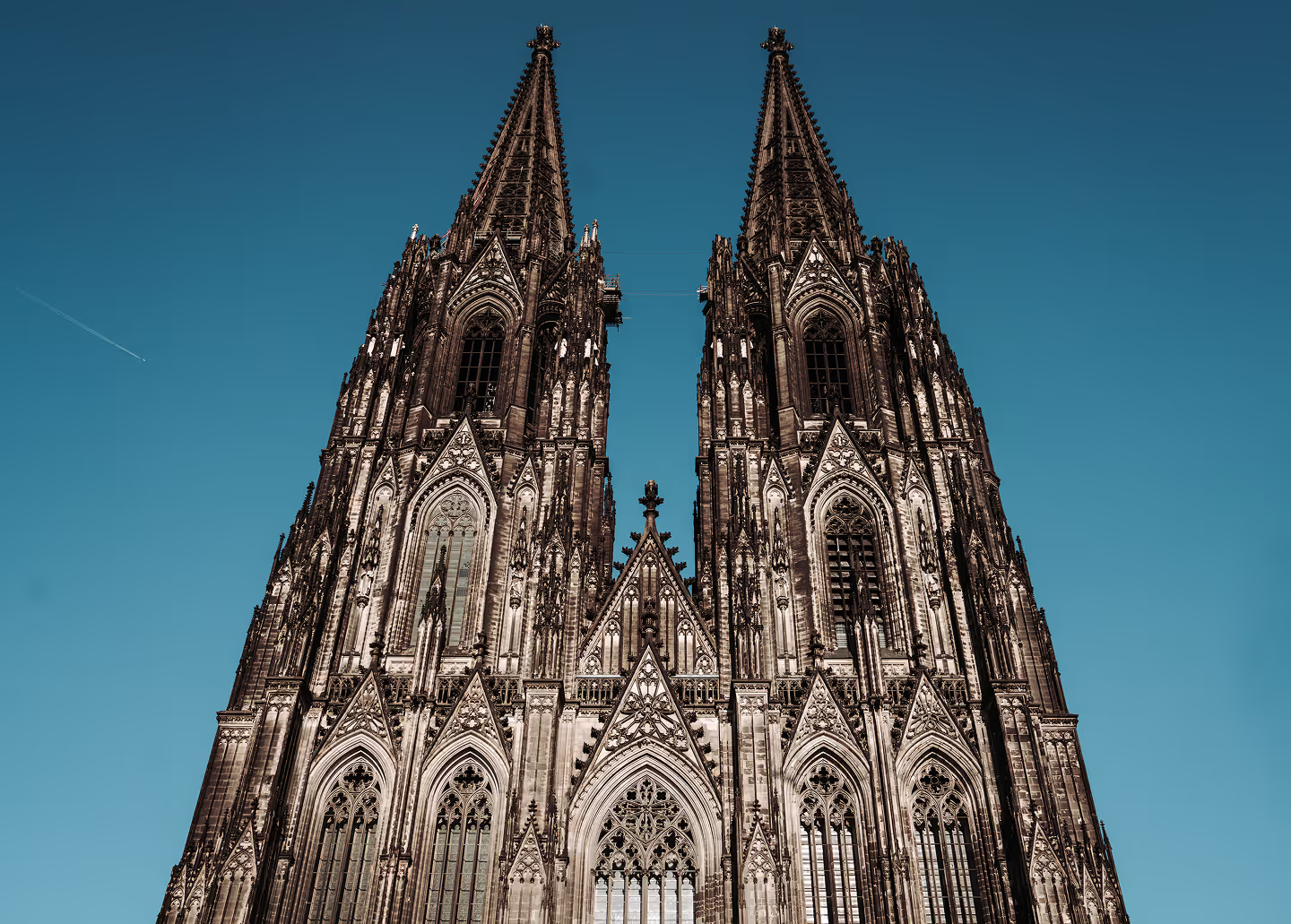
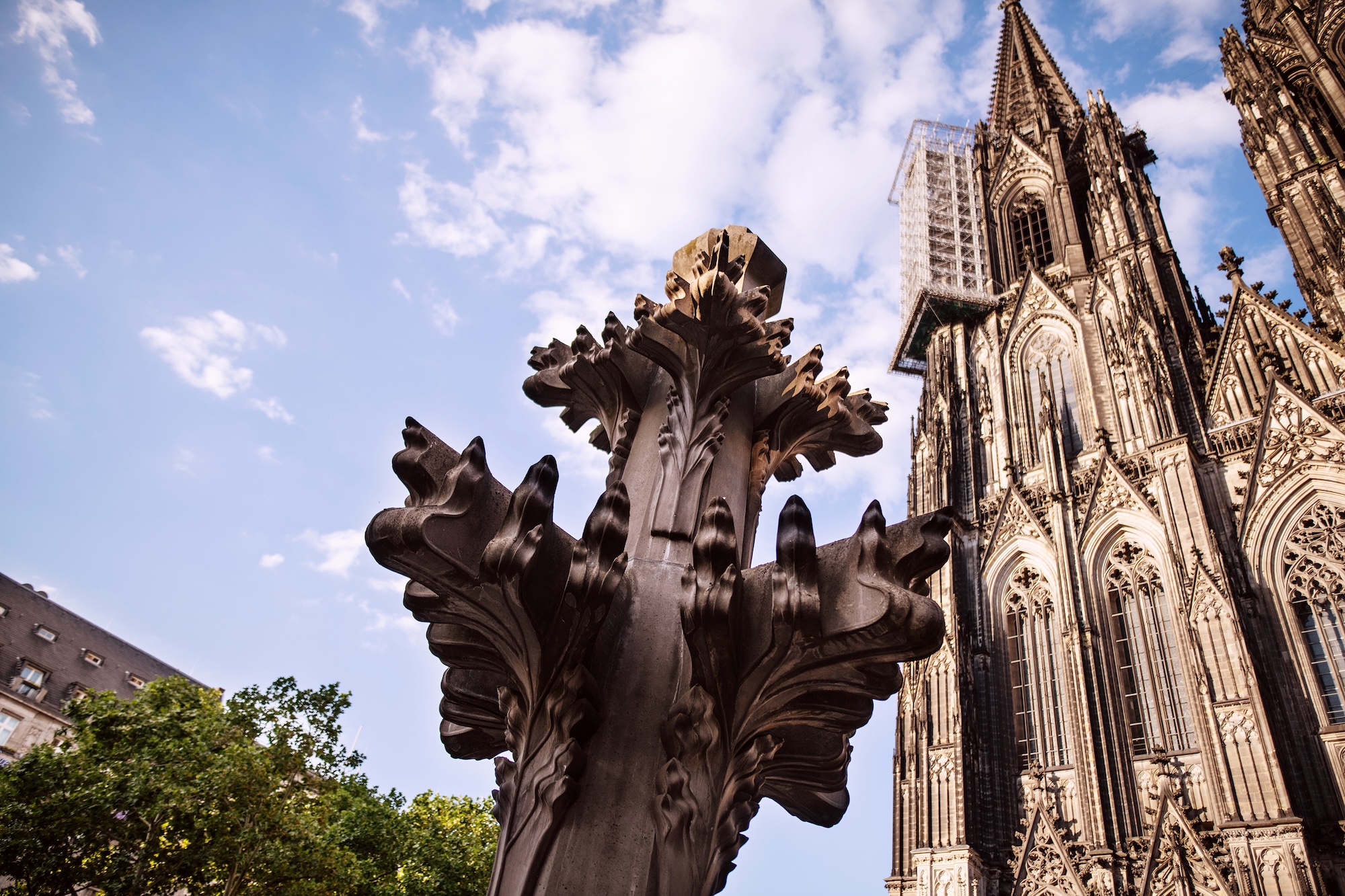
The Kreuzblume in front of Cologne Cathedral is a full-scale replica of the decorative finial at the top of the cathedral’s south tower. If you stand in front of the main entrance and look up at the cathedral, you will find the original right at the top of the tower on the right.
The current model, made of reinforced concrete, was installed in October 1991 in front of the cathedral’s west façade. The square is now called Kardinal-Höffner-Platz. According to the plaques around its base, the model is 9.50 metres high and 4.60 metres wide. It gives visitors a sense of the true size of an architectural detail that looks surprisingly small from street level.
For more than ten years, we have started our brewery tours at the Kreuzblume and welcomed guests here from all over the world. Many only really notice the structure once we explain what they are looking at: the topmost decoration of a cathedral tower, reproduced at a scale of 1:1. Then their eyes usually travel upwards, followed by a moment of disbelief. If this single detail is already this enormous, the scale of Cologne Cathedral suddenly feels even more impressive.

Why is it called a Kreuzblume?
A Kreuzblume is a decorative feature used in Gothic architecture. In the four-armed form seen on Cologne Cathedral, leaf-like shapes extend in four directions from a central stem. Viewed from above, they form a cross.
That is where the German name comes from: “Kreuz” means cross, while “Blume” means flower.
Kreuzblumen can be found on many other Gothic and Gothic Revival churches as well. They crown towers, gables and smaller pointed decorative turrets known as pinnacles. The word is therefore a proper architectural term rather than a nickname unique to Cologne.
What makes the Cologne example special is that visitors can examine a form normally seen only from far below at eye level.
When was the Kreuzblume installed, and why were there two versions?
The first full-size Kreuzblume model was installed in front of Cologne Cathedral in March 1980 to mark the 100th anniversary of the cathedral’s completion. It was made of plastic and was badly damaged by storm Wiebke in 1990. In October 1991, it was replaced by the reinforced-concrete version that stands there today.
The idea itself was much older. In the 19th century, cathedral architect Richard Voigtel had already proposed an additional Kreuzblume as a monument to the completion of the cathedral. His design was never realised, but the thought of bringing one of these tower decorations down to ground level therefore predates the modern replica by many decades.
The idea for the 1980 anniversary model came from Rudolf Barten of Cologne’s tourism office at the time. A sculptor named Uspelkat from Bergisch Gladbach produced it. The concept was simple: take one detail from the very top of the cathedral and place it on the ground to show visitors just how enormous the building really is.
When the replacement was created, the original on the south tower was studied more carefully. The proportions of the first model did not fully match those of the real Kreuzblume. The original was therefore measured again and photographed from the air. The result was a replica that reproduced its shape more accurately.
Several sponsors helped fund the reconstruction. If you read the plaque at the base, one name in particular may catch your eye: Altstadt-Bräu Johann Sion KG. In other words, a Cologne brewery business helped support the Kreuzblume where our tours begin today. The Sion name appears elsewhere in Cologne’s beer history too, including the Kölsch Convention and the origins of the Kölner Brauhauswanderweg.
What do the plaques around the Kreuzblume say?
The plaques around the base explain the Kreuzblume in 15 different language versions, including German, English, Japanese and Kölsch. They describe it as a full-scale replica, give its measurements and commemorate the completion of Cologne Cathedral in 1880.
Eight explanatory plaques are arranged around the upper ring and seven around the lower one. An additional plaque lists the sponsors involved in rebuilding the model.
It is worth walking all the way around. Alongside French, Spanish and Italian, you will find Dutch, Portuguese, Russian, Hungarian, Greek, Turkish, Chinese and Latin. And naturally, among all those languages, Kölsch gets a place of its own.
“Nohjemaate Krützblom jenau esu jroß wie bovve op denne Domtürm,” the Kölsch inscription says. Roughly translated: a replica Kreuzblume exactly as large as the ones up on the cathedral towers.
It is difficult to explain the purpose of the model any more briefly, or any more Cologne-style, than that.
With the exception of Latin, we have actually welcomed native speakers of every language represented on the plaques on our brewery tours. Apparently, we have not been in business quite long enough for the native Latin speakers yet.
What can you discover on the real Kreuzblumen at the top of the cathedral?
The stone Kreuzblumen crown both towers of Cologne Cathedral. Around each central stem are two rings of leaves of different sizes. Metal anchors secure the individual stone blocks, while close-up photographs also reveal narrow maintenance ladders and lightning conductors.
What looks like a small decorative flourish from the square below is therefore still a working part of the building that specialists need to access and maintain.
The Kreuzblumen also looked slightly different when the cathedral was officially completed in 1880. From the ground, they appeared too bulky. The stonemasons therefore had to climb back up and refine their shape.
Working inside heated protective shelters high above Cologne, they continued carving until February 1881. Down below, the completion of the cathedral had already been celebrated. Up on the towers, the work was still going on.
There is another detail you will never spot simply by looking up. The south tower reaches 157.22 metres, while the north tower measures 157.18 metres. The difference is just four centimetres.
Those figures refer to the total height of the towers, so they do not prove that the difference lies in the Kreuzblumen themselves. But after standing next to the enormous replica on the ground, the comparison is still remarkable: two towers rise more than 157 metres above Cologne, yet differ in height by only four centimetres.
Why has there been debate about removing the Kreuzblume?
The location of the Kreuzblume has been debated for years. Critics argue that the large model interferes with the view of the cathedral’s west façade and main entrance. There have also been calls to give the neighbouring Taubenbrunnen, or Pigeon Fountain, more visual space.
Others value the Kreuzblume as a meeting point and as one of the easiest ways for visitors to understand the true scale of Cologne Cathedral.
In 2015, an online petition was even launched to keep it in front of the cathedral. In November of that year, Cologne’s city council initially stopped plans to remove it and called for a solution to the dispute over its location. That did not settle the issue permanently.
As recently as 2025, the question of whether the Kreuzblume stands in the right place was still being discussed. Work on redesigning the northern surroundings of the cathedral began in January 2026, but according to the published plans, the Kreuzblume itself is not part of that project. It remains on Kardinal-Höffner-Platz.
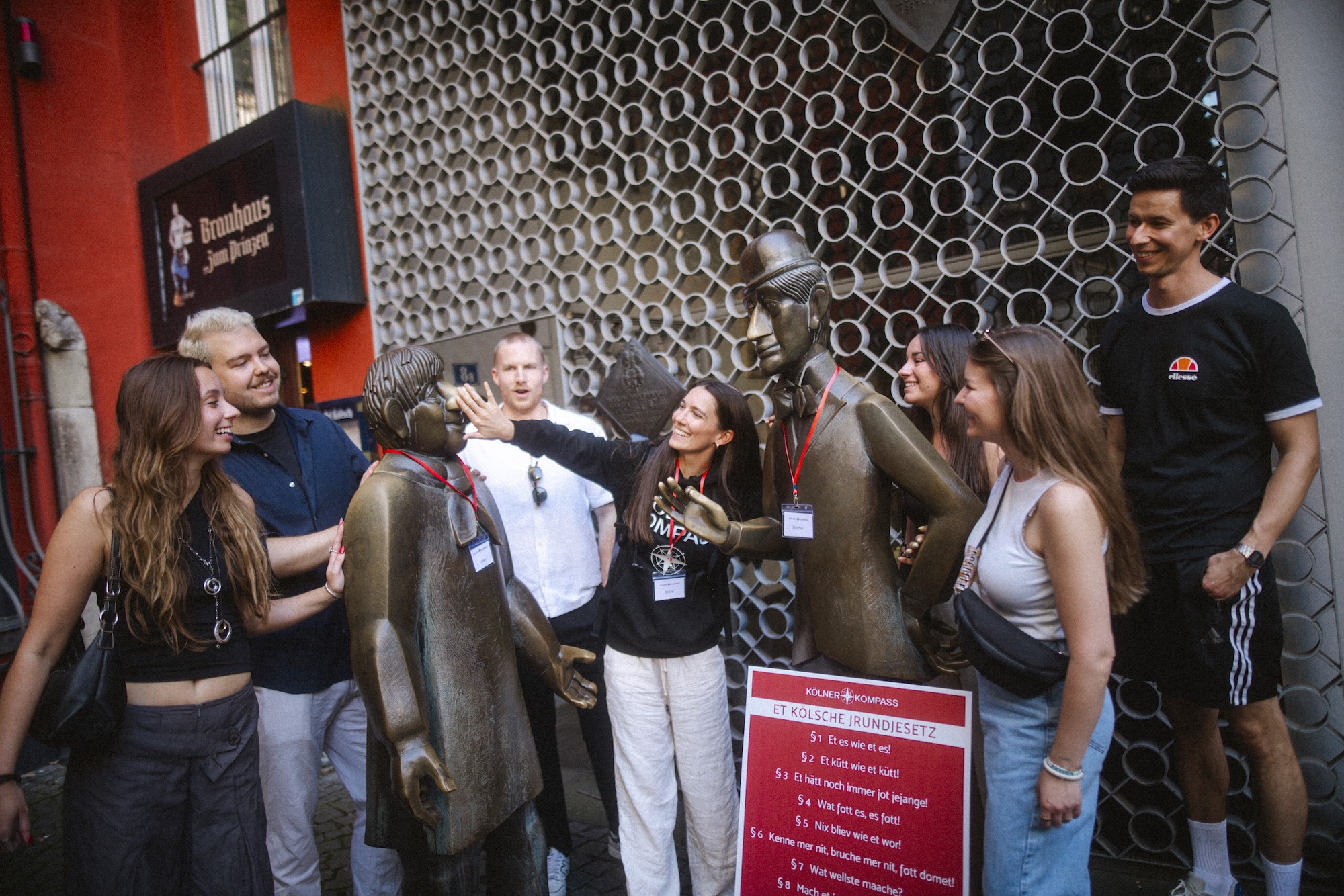
For us, the Kreuzblume has become part of arriving in Cologne together with our guests. It also happens to be a very good place for a first group photo. Many of our tour pictures have smiling guests in the foreground and Cologne Cathedral rising behind them.
What do visitors often miss right next to the Kreuzblume?
Right beside the Kreuzblume is the Taubenbrunnen by German artist Ewald Mataré. The fountain was inaugurated in 1953 and was designed as a drinking place for the cathedral pigeons.
A spiral channel of water runs through a shallow circular iron basin surrounded by a mosaic.
The fountain had already been there for decades when the first Kreuzblume model arrived in 1980. Because it sits so low to the ground, it is easy to overlook between the cathedral façade, the enormous Kreuzblume and the crowds passing through the square.
After looking all the way up to the cathedral towers, it is worth looking down as well. There is an artwork waiting there that many visitors simply walk past.
Where exactly is the Kreuzblume?
The Kreuzblume stands on Kardinal-Höffner-Platz in front of the west façade of Cologne Cathedral, below the steps leading to the main entrance. Café Reichard and the DOMFORUM are both immediately nearby and make useful landmarks.
From the main entrance of Cologne Central Station on the cathedral side, it is roughly a three-minute walk. Head towards the cathedral, keep to the right and continue around to the front with the two great towers. The Kreuzblume stands on the square in front of the main portals.
You can also search for “Kreuzblume Köln” in Google Maps and navigate directly to it.
If you are meeting someone here, it is worth saying specifically that you are meeting at the Kreuzblume. “At the cathedral” leaves quite a lot of room for interpretation when the building in question is this large.
How to recognise your guide for the brewery tour
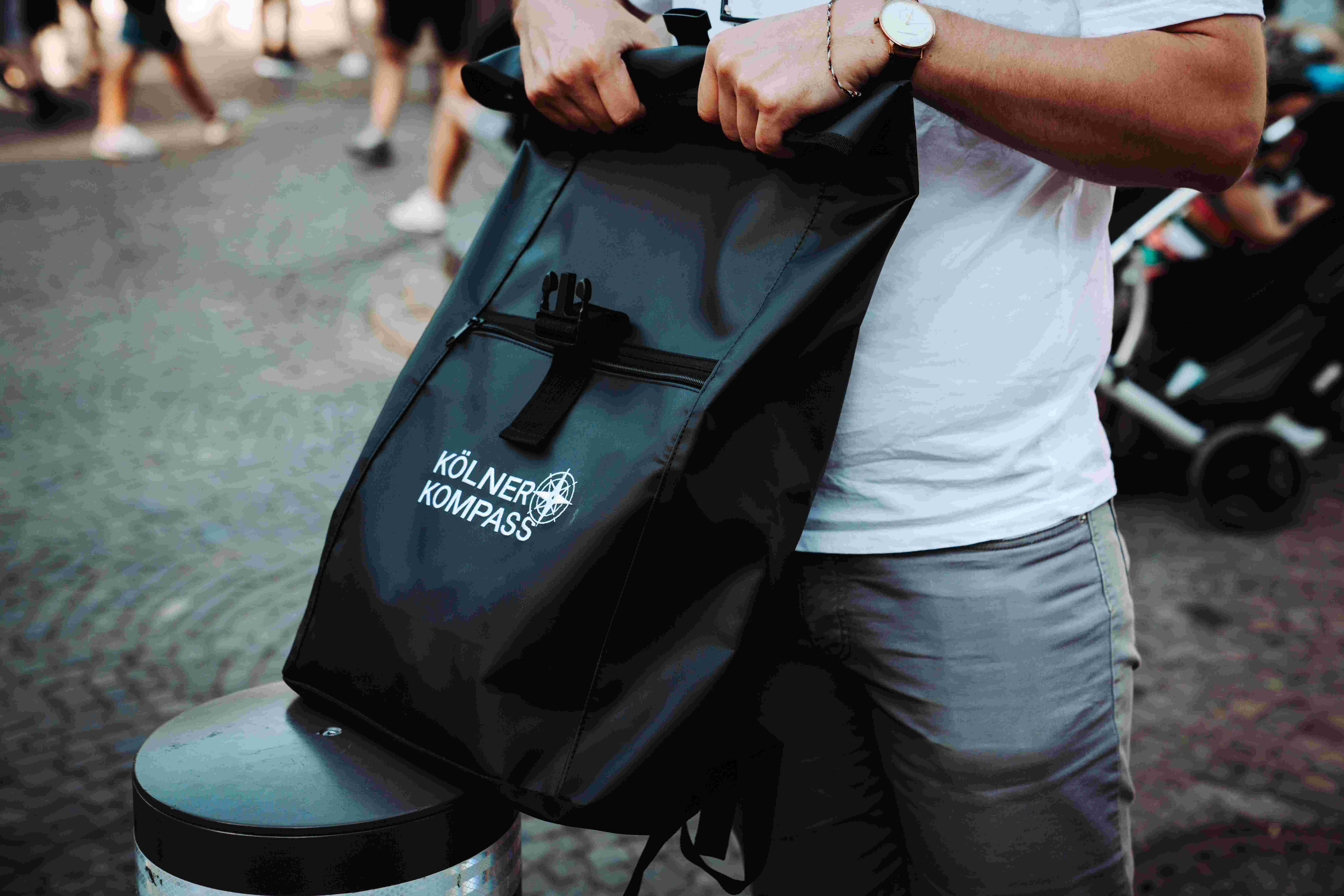
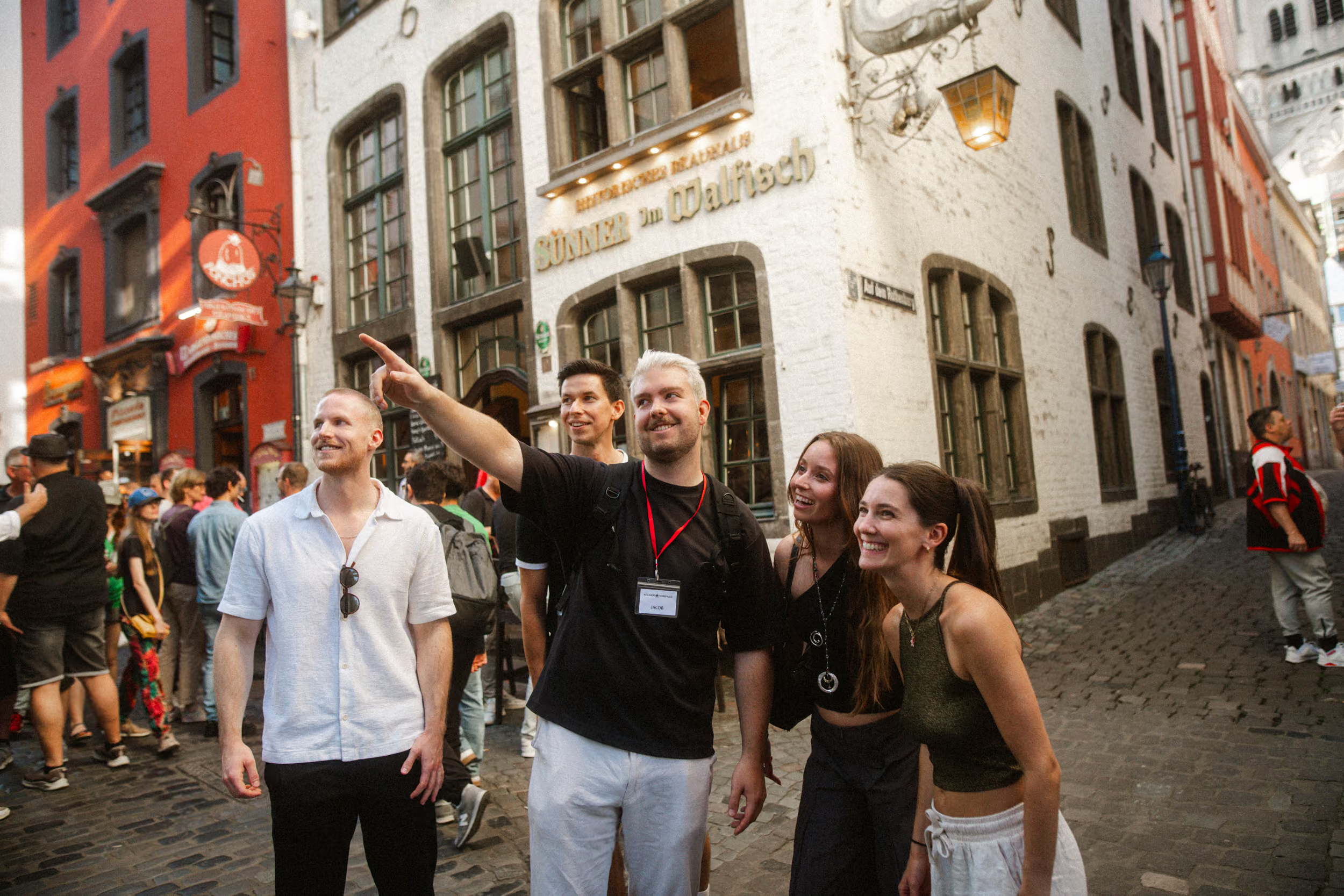
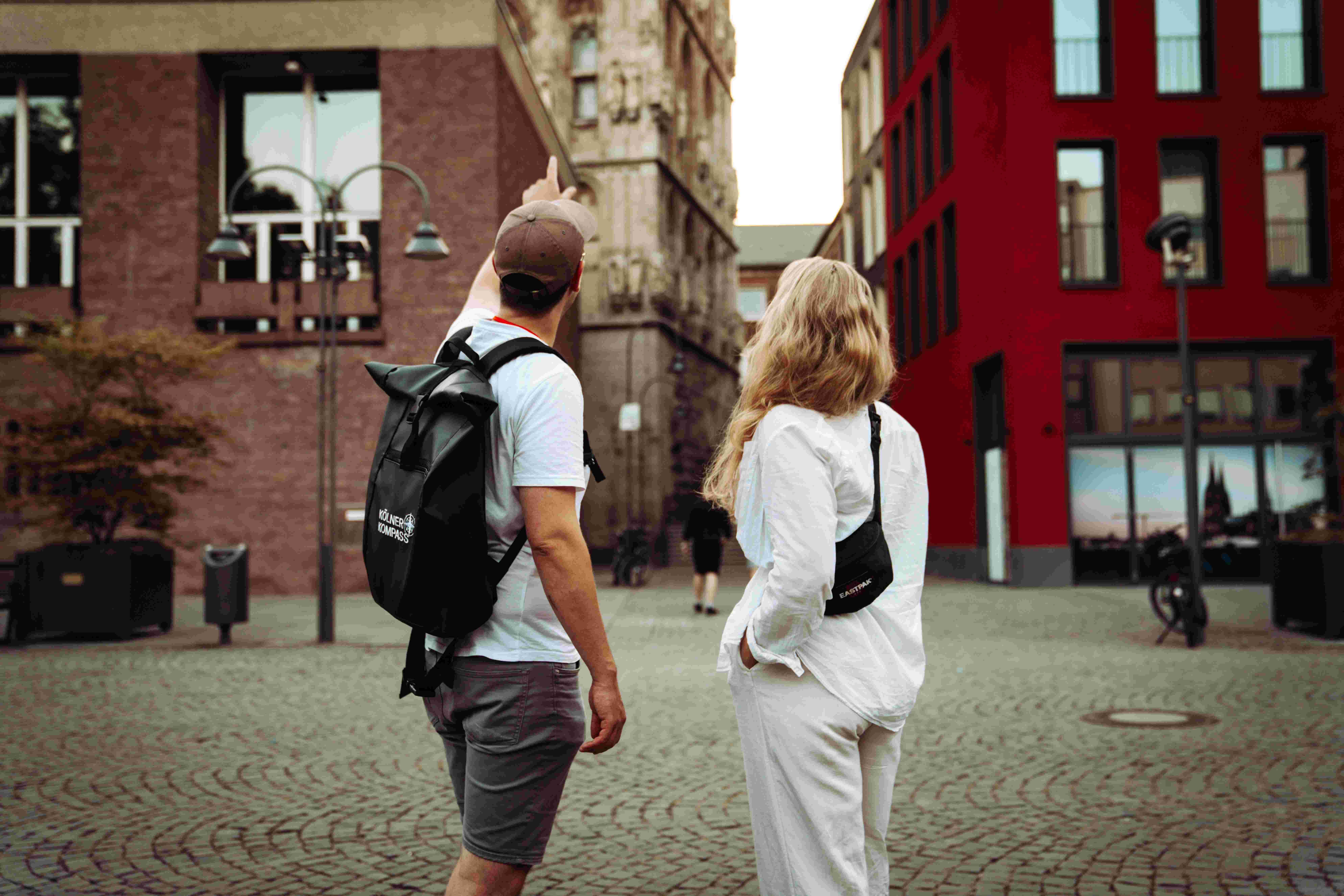
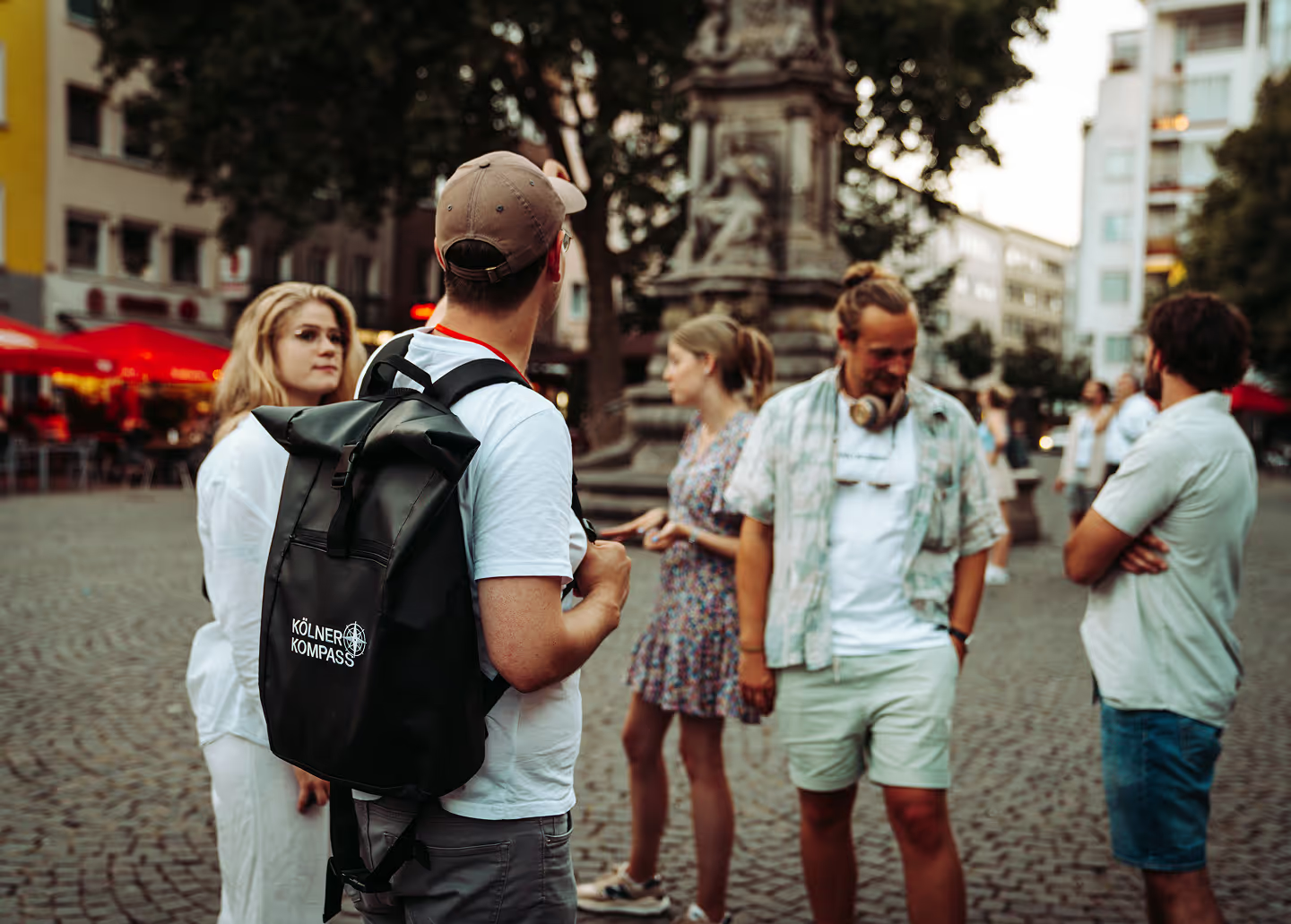
At our Kreuzblume meeting point, you can recognise Kölner Kompass guides by their black backpacks with the Kölner Kompass logo and the red name badges worn around their necks.
Just come over and say hello.
Ready when you are!
We look forward to exploring historic breweries, hearing stories about Cologne, and enjoying freshly tapped Kölsch with you.
Related posts
What else is going on in Cologne!
Join the Tour