.svg)
The Heinzelmännchen of Cologne: You Know the Legend. But Not These Details.

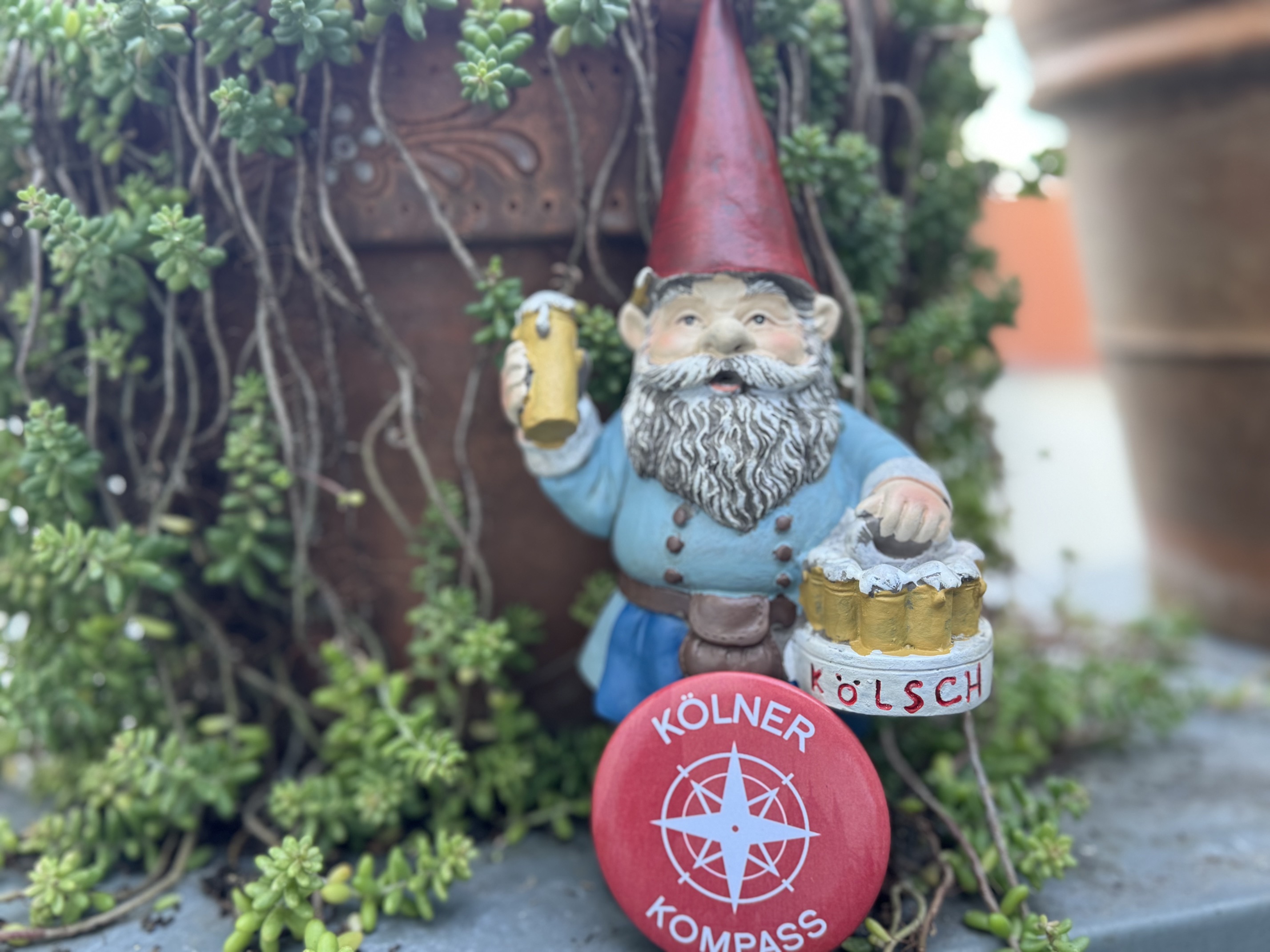
What are the Heinzelmännchen of Cologne?
The Heinzelmännchen of Cologne are small household spirits from a famous local legend. According to the story, they secretly did the work of craftsmen and helped around the house at night while everyone else was asleep.
They sound like the kind of helpers you would want to keep around. We would probably not let them take over our Brewery Tour Cologne from Kölner Kompass, though. We enjoy showing guests Cologne and its Brauhäuser far too much for that. We might consider sharing the workload. After all, anyone who spent that many nights secretly wandering around Cologne must have collected a few good stories along the way.

What does the legend of the Heinzelmännchen tell us?
The Cologne legend of the Heinzelmännchen tells how the people of the city lost their secret helpers because of the curiosity of a tailor’s wife. In August Kopisch’s famous poem, she scatters peas across the floor in an attempt to catch sight of them. The little creatures slip, fall over and make enough noise to wake her. When she rushes in with a light, the Heinzelmännchen disappear forever. From then on, the people of Cologne have to do their own work.
Kopisch describes quite vividly what they lost. Carpenters could rest while the Heinzelmännchen finished an entire house. Bakers woke to find fresh bread ready, butchers found their sausages prepared, and the helpers even sewed a ceremonial coat for the mayor.
The tailor’s wife’s curiosity is understandable. If you kept waking up to find all your work finished, you would probably want to know who was responsible too. Covering a staircase with peas, however, is a rather aggressive way of introducing yourself to your helpers. Whether her husband was particularly pleased with her afterwards is something the poem does not tell us.
Who invented the Heinzelmännchen?
No single person can be identified with certainty as the inventor of Cologne’s Heinzelmännchen. Ernst Weyden published the legend as early as 1826 in his collection Cöln’s Vorzeit. August Kopisch made the story widely known with his poem from 1836. He was therefore turning an existing tale into literature rather than creating it from scratch.
Weyden described his version as an oral tradition. That does not tell us how long the story had already been circulating before he wrote it down. His Heinzelmännchen do, however, differ in some rather surprising ways from the little figures many people imagine today.
In Weyden’s version, the Heinzelmännchen appear as small naked men. There is no mention of the familiar pointed caps. They are also rather relaxed about the concept of other people’s property. When their favourite person, a tailor, gets married, they fill his home with wonderful food and beautiful household goods. Weyden explicitly explains that they stole the gifts from elsewhere.
So the little helpers are certainly generous. It is just that somebody else appears to be paying for the wedding presents. In Weyden’s story, being helpful and being slightly cheeky are apparently not mutually exclusive.
Their departure is different too. After the tailor’s wife fails to discover them with her pea trap, the Heinzelmännchen leave Cologne invisibly, accompanied by music, and sail away on a ship. Nobody knows where they go.
Neither of these episodes appears in Kopisch’s poem.
Where does the name Heinzelmännchen come from?
According to the Duden dictionary, the name “Heinzelmännchen” comes from “Heinzel”, an affectionate form of the German first name Heinz. In folk belief, giving household spirits familiar or friendly names was thought to keep them in a good mood. Apparently, it was worth being polite to your supernatural helpers from the very beginning.
A rather surprising use of the name can also be found in a historical dictionary. Mandrake roots were sometimes called “Heinzelmännchen” because people believed they could act as helpful household spirits. Their branching shape could resemble a small human figure. Some roots were even dressed in clothes and sold as supposedly effective domestic spirits.
This shows that the word had another historical use, but it does not prove that the Cologne legend developed from beliefs surrounding mandrake roots.
Another possible explanation leads underground. A Heinzenkunst was a historical device used to pump water out of mines. This has led to the suggestion that the people operating such machinery may once have been called Heinzelmänner. The technical term itself is historically documented, but a direct connection to the name of Cologne’s Heinzelmännchen remains uncertain.
What is the moral of the Heinzelmännchen legend?
The story can be read as a warning against excessive curiosity and perhaps also against becoming a little too comfortable. At the end of his poem, Kopisch makes it clear that everyone now has to work for themselves. At the same time, he humorously describes just how readily the people of Cologne had accepted someone else doing all the work for them.
Kopisch therefore pokes fun not only at the curious tailor’s wife, but also at the rather comfortable Cologne residents who were perfectly happy to leave their jobs to the little helpers.
We cannot claim to be completely immune to that temptation ourselves. If the Heinzelmännchen offered to take care of our office work overnight, we probably would not object.
And the peas? They can safely stay on the dinner plate. It was hardly their fault that somebody decided to scatter them across a staircase.
Where can you find the Heinzelmännchen in Cologne today?
Today, you can encounter the Heinzelmännchen at the Heinzelmännchen Fountain near Cologne Cathedral and as figures along the Heinzweg at different locations around the city. During the Christmas season, they even have an entire Christmas market dedicated to them: Heinzels Wintermärchen on Alter Markt and Heumarkt.
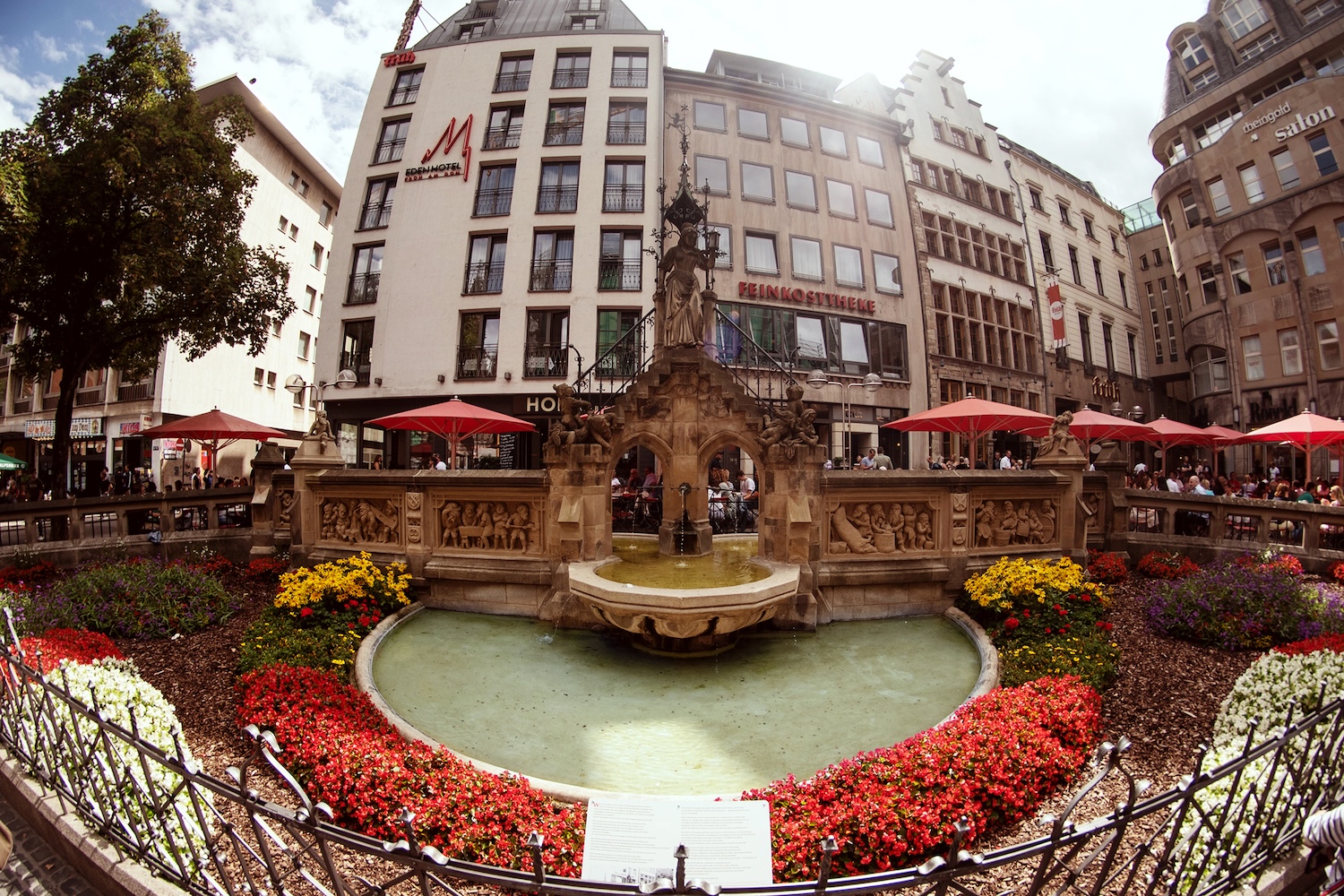
The fountain stands on the street Am Hof, right beside Früh am Dom. Take a moment to look closely at the figures and reliefs. This is where the story suddenly gets faces. In our separate article about the Heinzelmännchen Fountain in Cologne, we explain what to look out for.
We also show guests more Heinzelmännchen on our brewery tours, including figures at Peters Brauhaus and at the Keule. They are part of the Heinzweg, a route that brings Cologne’s little helpers back into the modern city.
Will the Heinzelmännchen ever return?
In August Kopisch’s poem, the Heinzelmännchen do not come back. The final line leaves little room for hope: “Doch kommt die schöne Zeit nicht wieder her!” In other words, those wonderful times are not coming back. There is no reconciliation and no condition under which the little helpers promise to return.
As characters, of course, the Heinzelmännchen have long since found their way back into Cologne. We are still waiting for the overnight assistance.
If we ever arrive at work one morning and discover that everything has already been done, we will probably just say thank you and avoid asking too many questions.
What do the Heinzelmännchen have to do with the Mainzelmännchen?
The name “Mainzelmännchen” is a play on words combining Mainz, the home of German broadcaster ZDF, with the Heinzelmännchen. Cologne’s legendary little helpers therefore helped inspire the name. The Mainzelmännchen themselves, however, are separate television characters that have appeared on ZDF since 1963.
The six Mainzelmännchen are called Anton, Berti, Conni, Det, Edi and Fritzchen. Cologne’s Heinzelmännchen, by contrast, are not given individual names in the versions by Weyden or Kopisch. They appear as a group.
There is also a fairly fundamental difference in how the two groups deal with attention. Cologne’s Heinzelmännchen do their work in secret, while their television relatives exist precisely to be watched between programmes and advertisements.
Unlike Cologne’s Heinzelmännchen, though, these six are unlikely to disappear just because someone turns on the light.
Ready when you are!
We look forward to exploring historic breweries, hearing stories about Cologne, and enjoying freshly tapped Kölsch with you.
Related posts
What else is going on in Cologne!
Join the Tour