.svg)
Kölner Brauhauswanderweg: How to Experience It Today

What is the Kölner Brauhauswanderweg?
The Kölner Brauhauswanderweg is a historic walking route through Cologne's brewing and city history, marked by distinctive plaques. It links traditional Brauhäuser, Cologne's characteristic beer halls and restaurants, with former brewing sites and landmarks, and was created to make the city's brewing culture tangible on foot.
The German word Wanderweg can sound more like a hiking trail than it really is in this case. The Brauhauswanderweg is an urban walk through central Cologne and the Old Town, not a countryside hike.
On the initiative of Hans Sion, the Hans Sion Foundation established the Brauhauswanderweg. It opened on 1 May 1993 and originally led to 13 beer houses and traditional Brauhäuser. One of its most recognisable features is the blue Brauhauswanderweg plaques, which draw attention to the history of the individual locations.
Former breweries, historic buildings, squares and stories from Cologne's wider city history were part of the concept from the beginning. The route therefore brought together brewing history, Brauhaus culture and city history in a single walk.
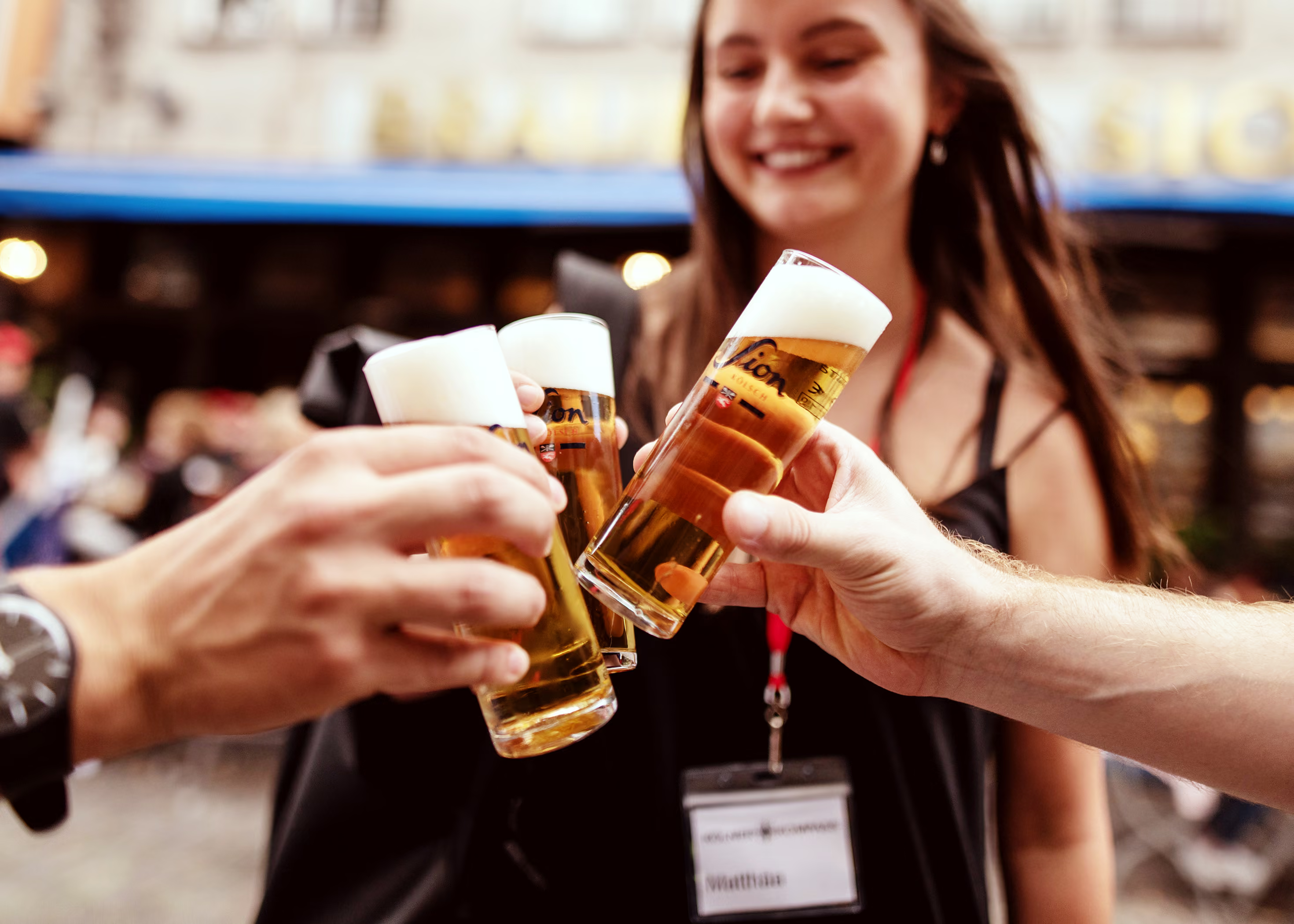
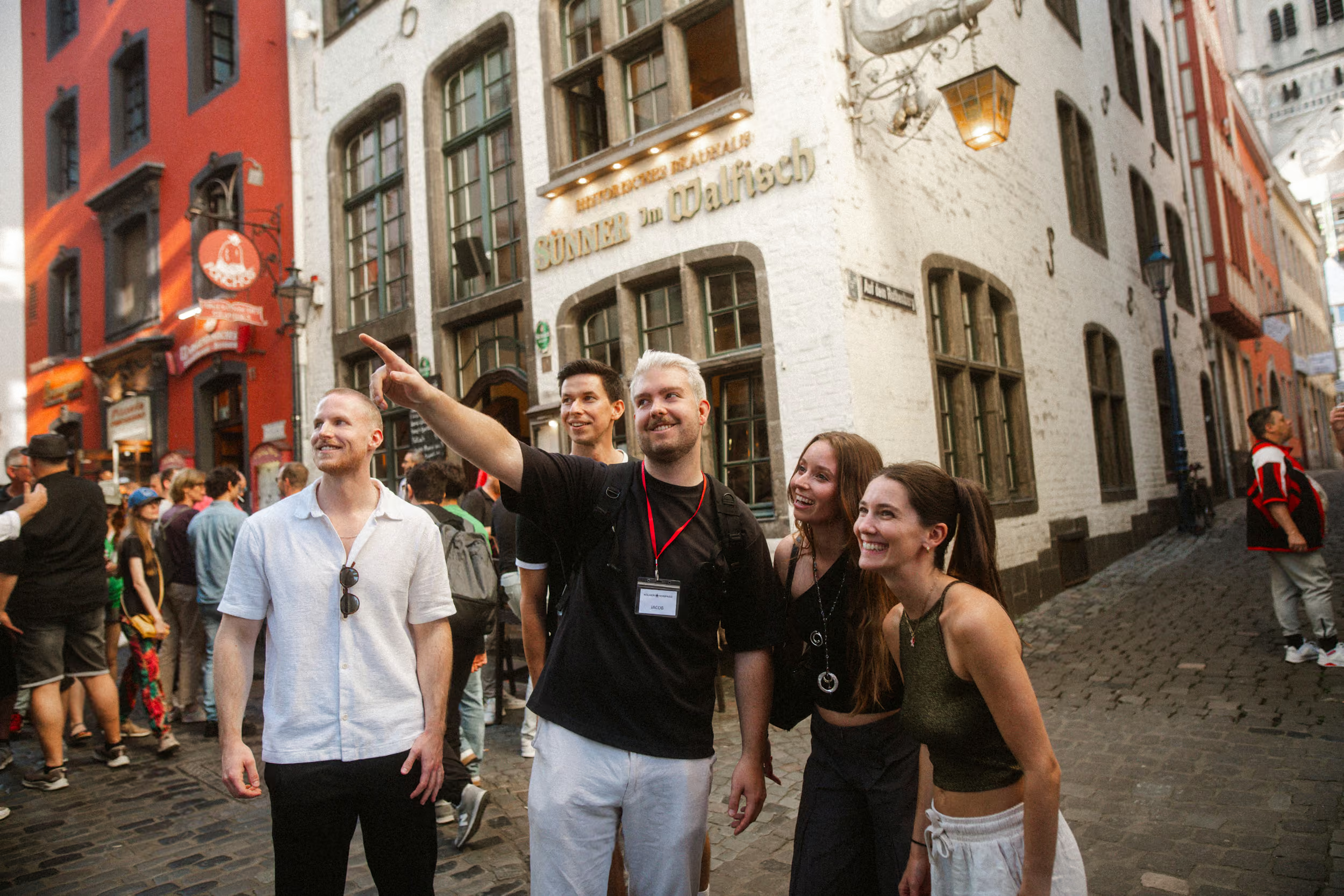
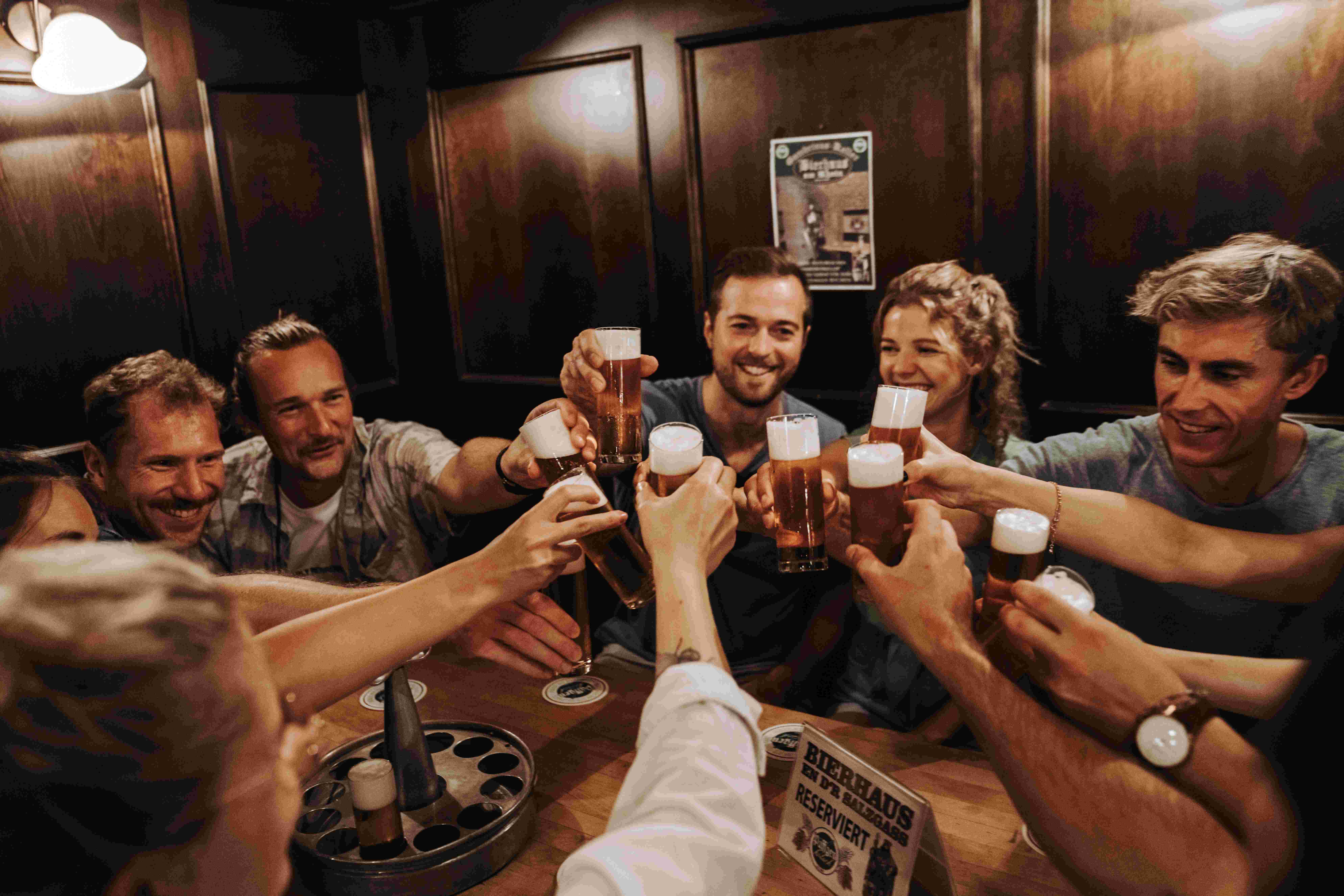
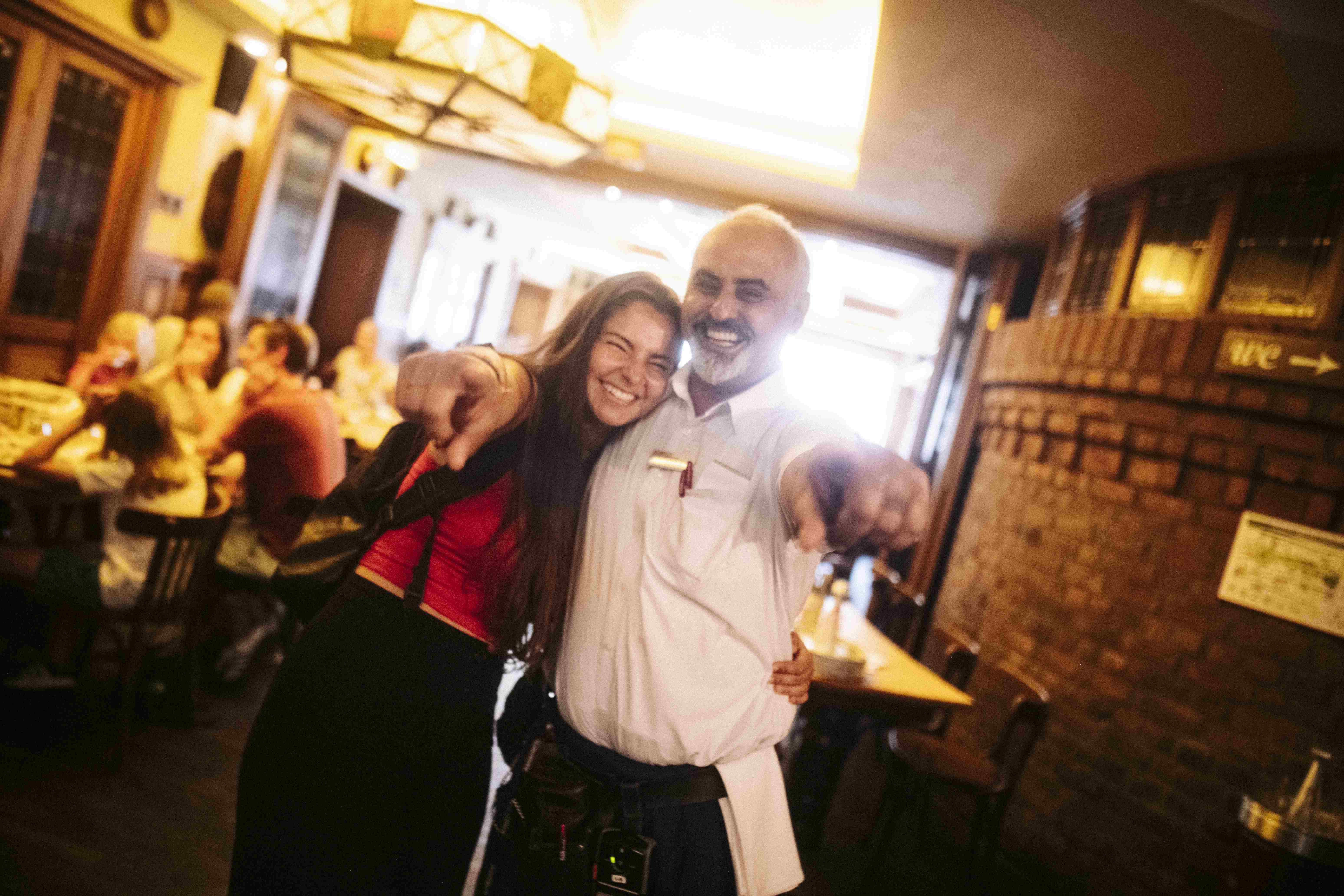
Today, the term Brauhauswanderweg is also used for other brewery walks and routes that were developed later. Historically, these should be distinguished from the original Kölner Brauhauswanderweg opened in 1993. At Kölner Kompass, we still find ourselves following many of its traces on our brewery tours. We walk through the Old Town, stop inside traditional Brauhäuser for Kölsch, Cologne's local beer, and tell the stories behind the beer, the Köbes, the traditional waiter in a Cologne Brauhaus, and the city's unique Brauhaus culture. The basic idea is familiar, but we tell it in our own relaxed way.
When was the Kölner Brauhauswanderweg opened?
The Kölner Brauhauswanderweg opened on 1 May 1993. A contemporary report in the brewing trade journal BRAUWELT covered the new route created by the Hans Sion Foundation that same year. The original route featured 13 beer and Brauhaus stops.
A first printed guide appeared in 1993 to accompany the route. Its German title was "Kölner Brauhaus Wanderweg. Ein feuchtfröhlicher Rundgang durch Geschichte und Gegenwart", roughly meaning "A convivial walk through history and the present". The 56-page booklet was published by the Hans Sion Foundation with J. P. Bachem Verlag in Cologne. A second, revised edition followed as early as 1995.
Who created the Kölner Brauhauswanderweg?
The Kölner Brauhauswanderweg was initiated by Hans Sion and established by the Hans Sion Foundation. Franz Mathar, an author and expert on Cologne's brewing and city history, also played an important role in researching, organising and communicating the route.
Hans Sion had founded the Hans Sion Foundation in 1992 to preserve and document Cologne's brewing history. Later publications about the Brauhauswanderweg explicitly describe him as its initiator. The foundation provided the organisational framework and turned the idea into a walk through Cologne's brewing and city history.
A recollection from the Haxenhaus gives a good idea of how practical this work could be. Franz Mathar visited the house on behalf of the Hans Sion Foundation, researched the former brewing site known as "Zum verlorenen Sohn" and asked the landlord whether the Haxenhaus would like to become part of the historic Brauhauswanderweg. A characteristic Brauhauswanderweg plaque was intended to make that connection visible on the facade.
The trail was therefore not simply the work of one person. Hans Sion provided the decisive impulse, the Hans Sion Foundation put the project into practice, and Franz Mathar helped research the history of individual stops and bring the route to life.
Later, the Kölner Brauerei-Verband e.V., Cologne's brewery association, also played an important role in continuing and communicating the Brauhauswanderweg. Plaques visible in Cologne today still carry the association's name. The association also continues to support the protection of Kölsch and the preservation and visibility of Cologne's Brauhaus culture.
Why was the Kölner Brauhauswanderweg created?
The Kölner Brauhauswanderweg was created to preserve the history of Cologne's brewing culture and make it accessible during a walk through the city. The idea was not limited to visiting Brauhäuser that were still operating. Former breweries, historic brewing sites, landmarks and stories from Cologne's city history were deliberately connected as part of the route.
The scale of that history becomes clear from a figure used in literature about the Brauhauswanderweg: more than 300 former and present-day beer houses and Brauhäuser are associated with Cologne's brewing past and present. Many historic brewing sites have long since disappeared or are barely recognisable as such today. The Brauhauswanderweg helped make those traces visible again and explained the role individual buildings, squares and locations played in the development of Cologne's beer culture.
The route was therefore never conceived simply as a pub crawl from one Kölsch to the next. The Hans Sion Foundation saw it as a cultural and historical city walk in which brewing history, landmarks and Cologne's distinctive Brauhaus culture belonged together. That culture includes the beer itself, the Köbes, traditional Brauhaus food and the stories behind the individual houses.
At Kölner Kompass, we interpret that basic idea in our own modern way. We do not rigidly follow one historic itinerary. Instead, we walk through Cologne with our guests, stop inside traditional Brauhäuser and connect the Kölsch on the table with the stories of the city and its brewing culture. It is the same connection between Brauhaus and city history, presented in a relaxed and contemporary way.
Which sights can you see along the Kölner Brauhauswanderweg?
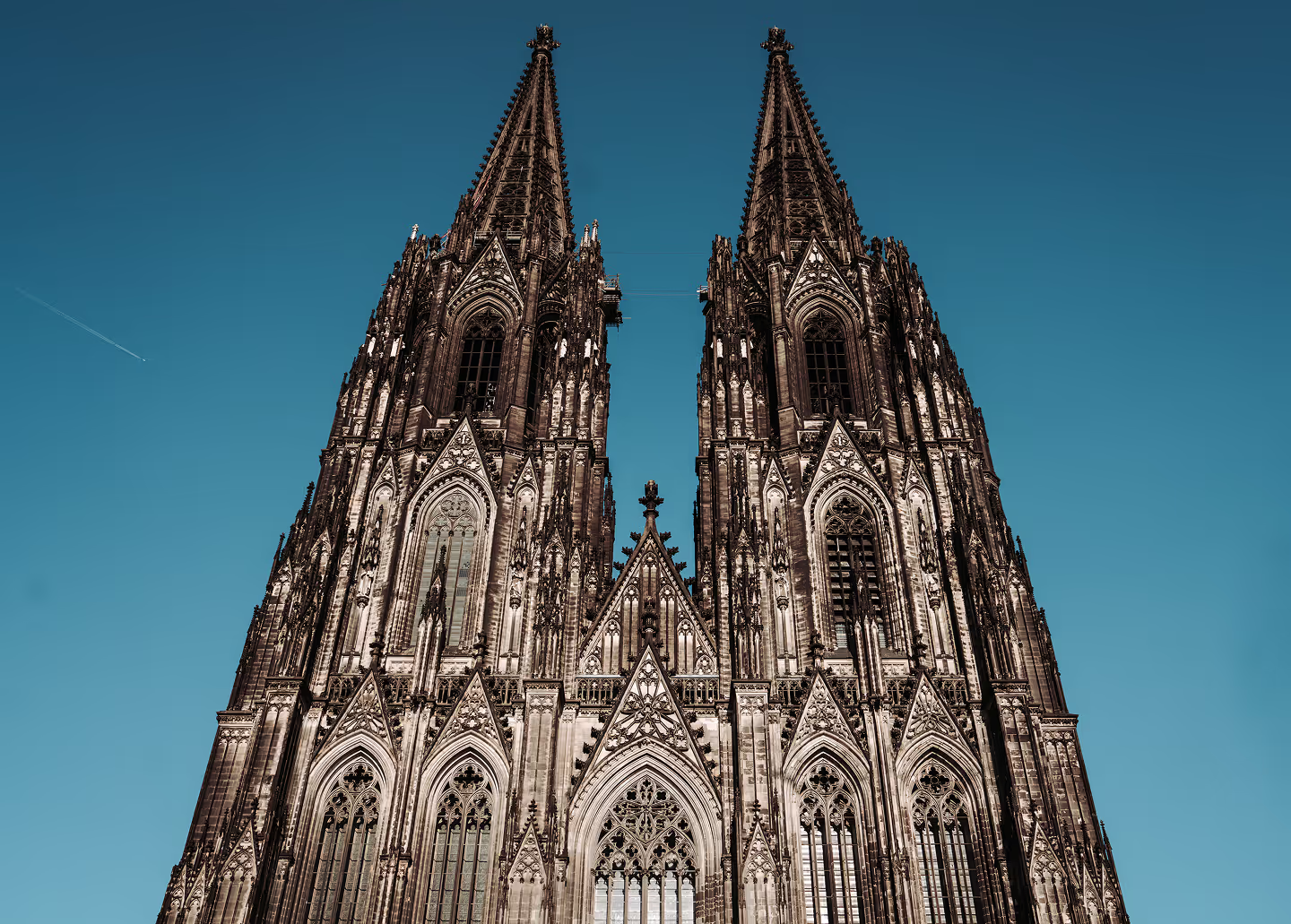
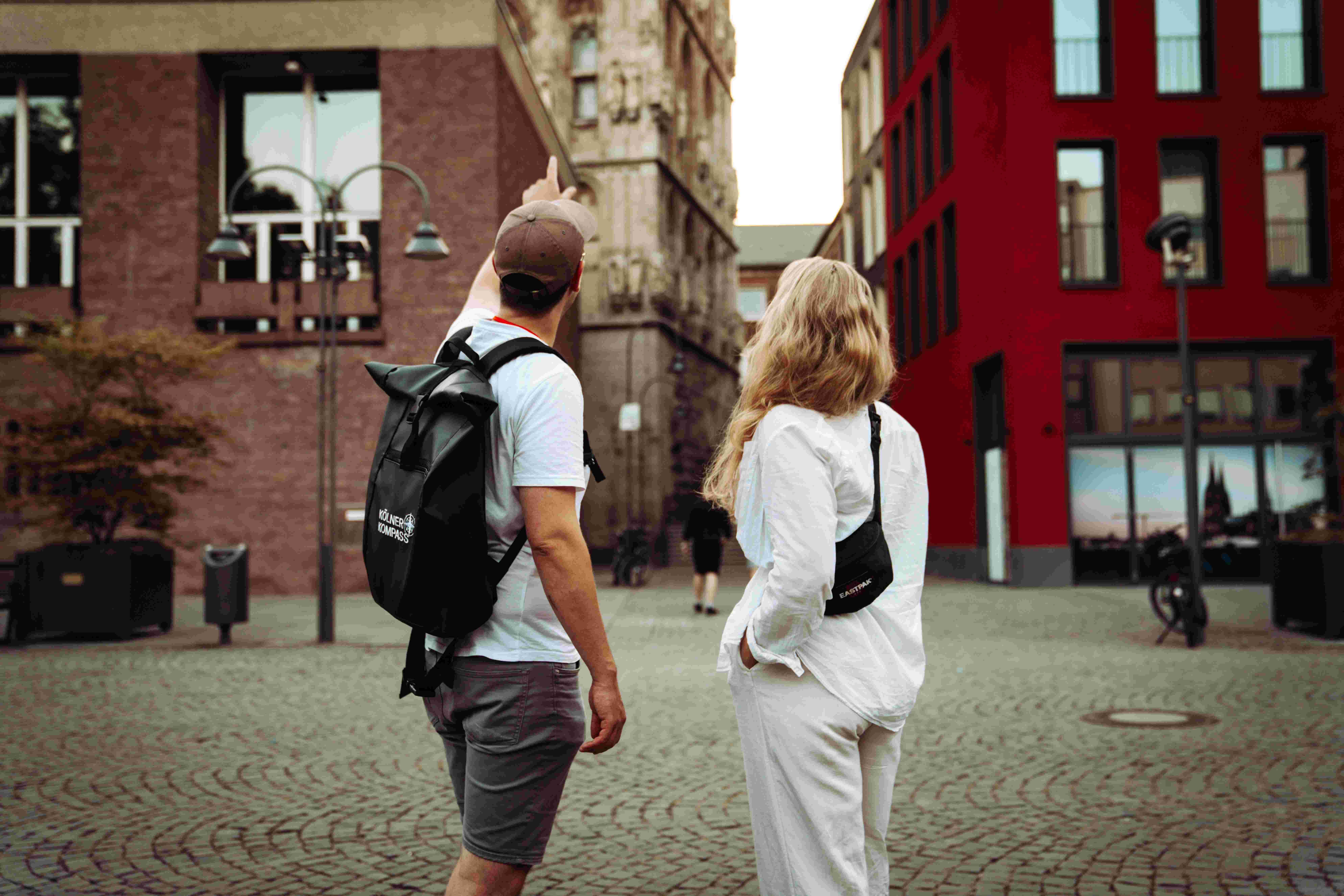
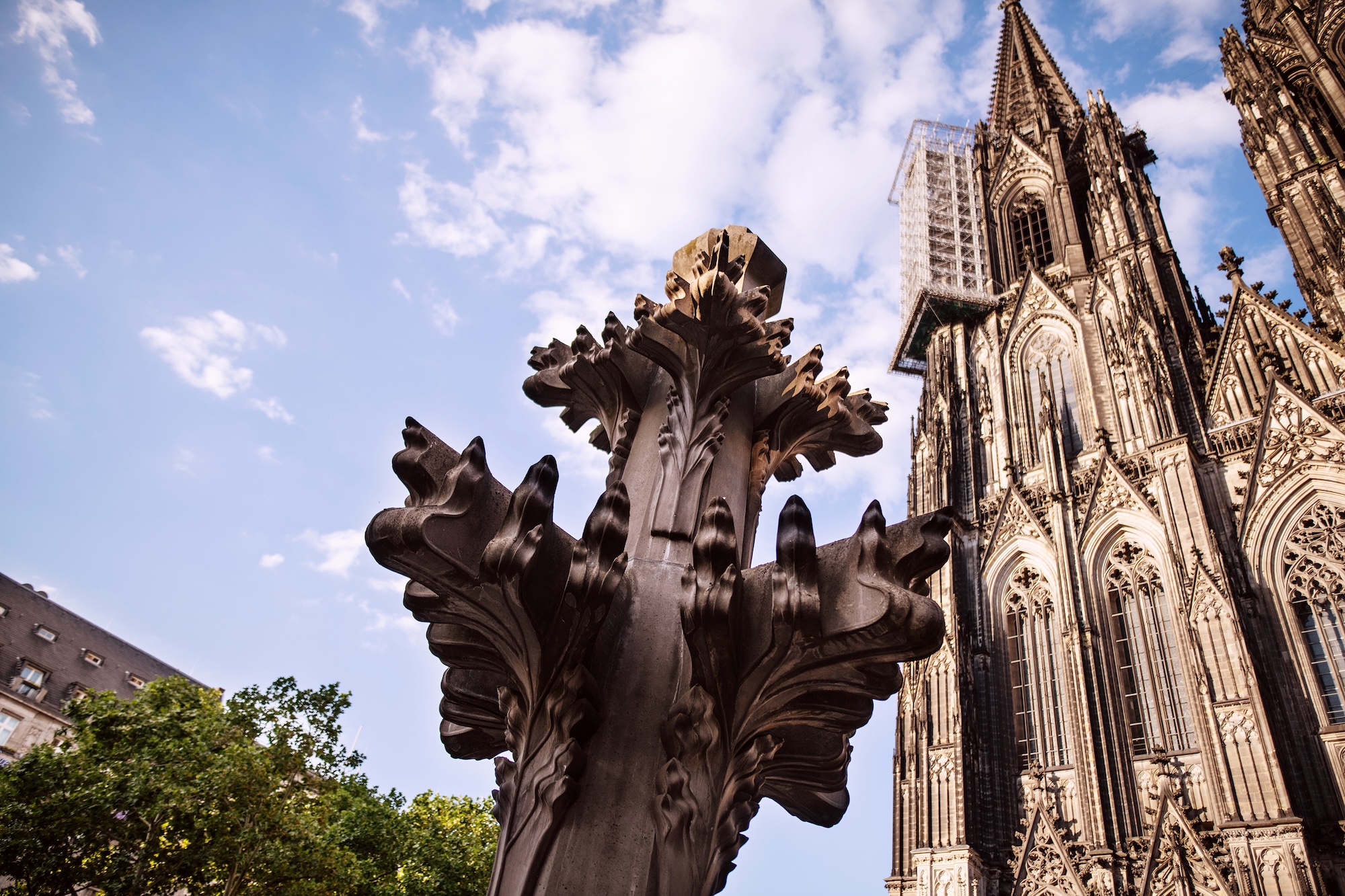
The Kölner Brauhauswanderweg runs through the historic Old Town and places many of its Brauhaus stops within a few minutes of some of Cologne's best-known landmarks. Along the familiar Old Town sections, you can pass Cologne Cathedral, the Heinzelmännchen Fountain, the Historic City Hall, Alter Markt and Heumarkt.
There is already enough history around the Cathedral for several stories. Exactly 632 years separate the laying of its foundation stone in 1248 from its completion in 1880, although construction was interrupted for long periods in between. Just a few steps away, near Früh am Dom, the Heinzelmännchen Fountain recalls the legend of Cologne's mysterious little helpers. They were said to do the city's work at night until a curious tailor's wife scattered peas on the stairs in an attempt to catch them.
Continue through the Old Town and you reach the Historic City Hall and Alter Markt, right in the political and social heart of old Cologne. Here, centuries of city history and Brauhaus culture sit so close together that only a few steps can separate a historic facade from the next Kölsch.
At Heumarkt, Cologne's past and present meet particularly well. The square was an important trading place for centuries. Today, many people know it for a very different reason: every 11 November at 11:11 a.m., thousands of Carnival revellers, known locally as Jecke, gather here to mark the opening of Cologne's Carnival season. That is what makes this kind of walk so enjoyable. There may be only a few hundred metres between two Brauhäuser, but several centuries of Cologne history can fit into the space between them.
How can you recognise the stops on the Kölner Brauhauswanderweg?
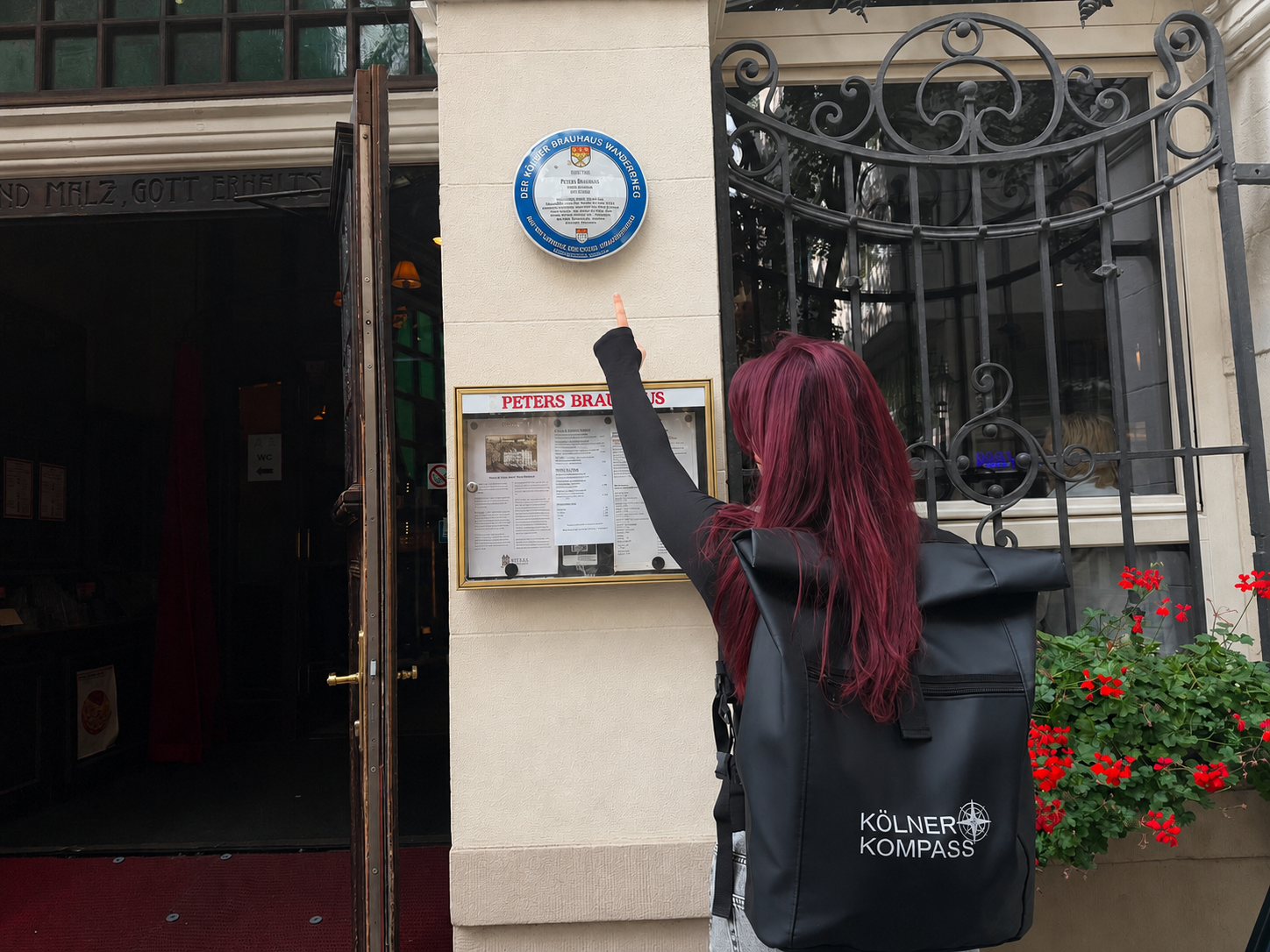
The stops on the Kölner Brauhauswanderweg can be recognised above all by the characteristic blue plaques found at a number of historic Brauhaus locations around Cologne. Many can still be seen on facades or near the entrances to the buildings, making the historic trail visible in the modern cityscape.
The plaques do more than identify a Brauhaus. Each one tells part of the story of the location. A good example can be found at Früh am Dom. Its round blue plaque carries the words "Der Kölner Brauhaus Wanderweg" and the motto "Auf den Spuren kölscher Brautradition", which can be translated as "On the trail of Cologne brewing tradition". The centre of the plaque introduces Früh am Dom as a historic Brauhaus and refers to its history since 1904 as well as the origin of its name.
The Kölner Brauerei-Verband e.V. is also named on the plaque visible at Früh am Dom today. Its emblem combines the three crowns associated with Cologne's heraldic tradition with historic symbols of the brewing craft. The plaque therefore also makes the connection between the Brauhauswanderweg, Cologne's brewing tradition and the city's brewery association visible.
The plaques work like small historical profiles for the individual stops. They help visitors understand the brewing history of a location while standing directly in front of it, and they keep the historic Brauhauswanderweg recognisable in Cologne today.
Which stops were part of the Kölner Brauhauswanderweg, and how has the route changed?
The Kölner Brauhauswanderweg began in 1993 with 13 stops at beer houses and Brauhäuser in central Cologne and the Old Town. The original line-up is particularly interesting today because it offers a snapshot of Cologne's Brauhaus landscape in the early 1990s. Some of the names are still immediately familiar, while others refer to historic Brauhäuser and former brewing sites whose stories live on at the same locations.
The 13 original stops on the Kölner Brauhauswanderweg were:
- Brauhaus "Unter Taschenmacher", Altstadtbräu Johann Sion
- Brauhaus "Alt Köln am Dom"
- Brauhaus "Cölner Hofbräu P. Josef Früh"
- Brauhaus "Zum Kranz", Brauerei Peters & Bambeck
- Privatbrauerei Gaffel "Zur Bretzel"
- Brauhaus "Zum Reiter"
- Brauhaus "Zum Verlorenen Sohn"
- Brauhaus "Heinrich zur Krae"
- Altstadtausschank Brauerei Päffgen
- Brauhaus "Zum Sankt Peter"
- Brauhaus "Zur Malzmühle"
- Brauhaus "Witwe Heinr. Kolter"
- Brauhaus "Gürzenichbräu"
One important point helps make sense of this list: the historic names did not always describe the restaurant or Brauhaus that visitors actually entered in 1993. The Brauhauswanderweg was deliberately designed to preserve the memory of older Brauhäuser and former brewing sites, so it often used their historic names. In some cases, a different restaurant was already operating in the same building or at the same location. The route was therefore not simply a list of places to drink. It was a walk through several centuries of Cologne's brewing and Brauhaus history.
That is what makes comparing the old route with Cologne today so interesting. "Unter Taschenmacher" leads us to today's Brauhaus Sion, "Cölner Hofbräu P. Josef Früh" is familiar today as Früh am Dom, and the history of "Zum Kranz" is connected with today's Peters Brauhaus. Privatbrauerei Gaffel "Zur Bretzel" links the route to the present-day Gaffel Haus at Alter Markt. "Zum Verlorenen Sohn" forms part of the history of today's Haxenhaus, while Sünner im Walfisch now stands at the historic site associated with "Heinrich zur Krae". The former "Zum Sankt Peter" can be connected with today's Gilden im Zims, while the Malzmühle has kept its familiar name to this day.
Other well-known Brauhäuser also show how the Brauhauswanderweg has evolved. Bierhaus en d'r Salzgass stands at a historic Brauhaus location whose story is told in the old guide under the name "Zur Täsch".
Modern descriptions of the Brauhauswanderweg therefore sometimes feature a different selection of Brauhäuser. Frequently mentioned today are Brauhaus Sion, Gaffel am Dom, Früh am Dom, Peters Brauhaus, Gaffel Haus at Alter Markt, Haxenhaus, Sünner im Walfisch, Bierhaus en d'r Salzgass, Gilden im Zims and Brauerei zur Malzmühle. The fact that names and stops have changed is not a contradiction in the history of the route. It reflects how Cologne's Brauhaus landscape has continued to develop since the 1990s.
The idea was later expanded beyond a single Brauhauswanderweg. In 2011, Franz and Albertus Mathar published "Kölner Brauhauswanderwege. Gesellige Rundgänge durch die Kölsch-Kultur". Alongside the Old Town, the book presents walks through the north, south and west of Cologne, bringing numerous Brauhäuser and historic brewing sites outside the classic Old Town into the picture.
These later walks should not be treated as identical to the original Brauhauswanderweg of 1993. Instead, they show how the idea of the Brauhauswanderweg continued to evolve together with Cologne's living Brauhaus culture.
How long does the Kölner Brauhauswanderweg take?
The pure walking distance through Cologne's Old Town is surprisingly short. For this article, we mapped a compact route from Gaffel am Dom via Früh am Dom and Brauhaus Sion to the Malzmühle. It comes to around 1.6 kilometres, or roughly 22 minutes of walking. The route takes you through the historic Old Town, including narrow lanes and sections of old cobblestones.
If you want to include more well-known stops, Peters Brauhaus, Gaffel Haus at Alter Markt, Haxenhaus, Sünner im Walfisch, Bierhaus en d'r Salzgass and Gilden im Zims can all be worked into the wider Old Town route. There is no need to visit every stop in a single day. Choosing three or four Brauhäuser and saving the rest for another visit is often a much more enjoyable way to experience it.
That does not mean you should plan only 22 minutes for a Brauhauswanderweg. Most of the time is spent inside the Brauhäuser, not on the pavement between them. Stop in two or three houses for a Kölsch and some time to enjoy the atmosphere, and the experience can easily take several hours.
At Kölner Kompass, we also vary our brewery tour routes depending on the group, the situation on the day and how busy the individual Brauhäuser are. We do not follow the same fixed itinerary every time, but we always stop inside at least three traditional Brauhäuser.
Can you still walk the Kölner Brauhauswanderweg yourself today?
Yes. You can still explore the historic Kölner Brauhauswanderweg on your own today. Many of its well-known stops are close together in Cologne's Old Town, and blue plaques at various Brauhäuser and historic brewing locations still point to the history of the trail.
Because the route and its stops have changed over time, it is better to think of the Brauhauswanderweg today as a historical trail through the city rather than an itinerary that has remained unchanged since 1993.
Cologne's Old Town is particularly easy to explore on foot. Cologne Cathedral, Alter Markt, the riverfront, Salzgasse and Heumarkt are all within a few minutes' walk of one another. Anyone exploring independently should simply keep in mind that restaurants, opening hours and individual stops can change over time.
At Kölner Kompass, we interpret the original idea of the Brauhauswanderweg in our own modern way. Our brewery tours are suitable for solo travellers, couples and small groups as well as larger groups and company events. Guests should not expect a dry history lecture. We walk through the Old Town, stop inside traditional Brauhäuser and keep things lively with humour, local stories and that very Cologne mix of Kölsch and culture. Stories about the Brauhäuser, the Köbes and Cologne's local quirks belong to the experience just as much as sharing a Kölsch together at the table.
If you simply want to follow the historic plaques and locations, the Brauhauswanderweg is easy to explore independently. If you would rather hear the stories behind those places in an entertaining way, you can experience this side of the city with us on a Kölner Kompass brewery tour.
Ready when you are!
We look forward to exploring historic breweries, hearing stories about Cologne, and enjoying freshly tapped Kölsch with you.
Related posts
What else is going on in Cologne!
Join the Tour