.svg)
Why Is Kölsch Served in Small Glasses?


Why Is Kölsch Served in Small Glasses?
When many international visitors think about German beer culture, they often imagine huge one-liter beer mugs like at Oktoberfest in Munich. That is exactly why Cologne surprises so many people for the first time.
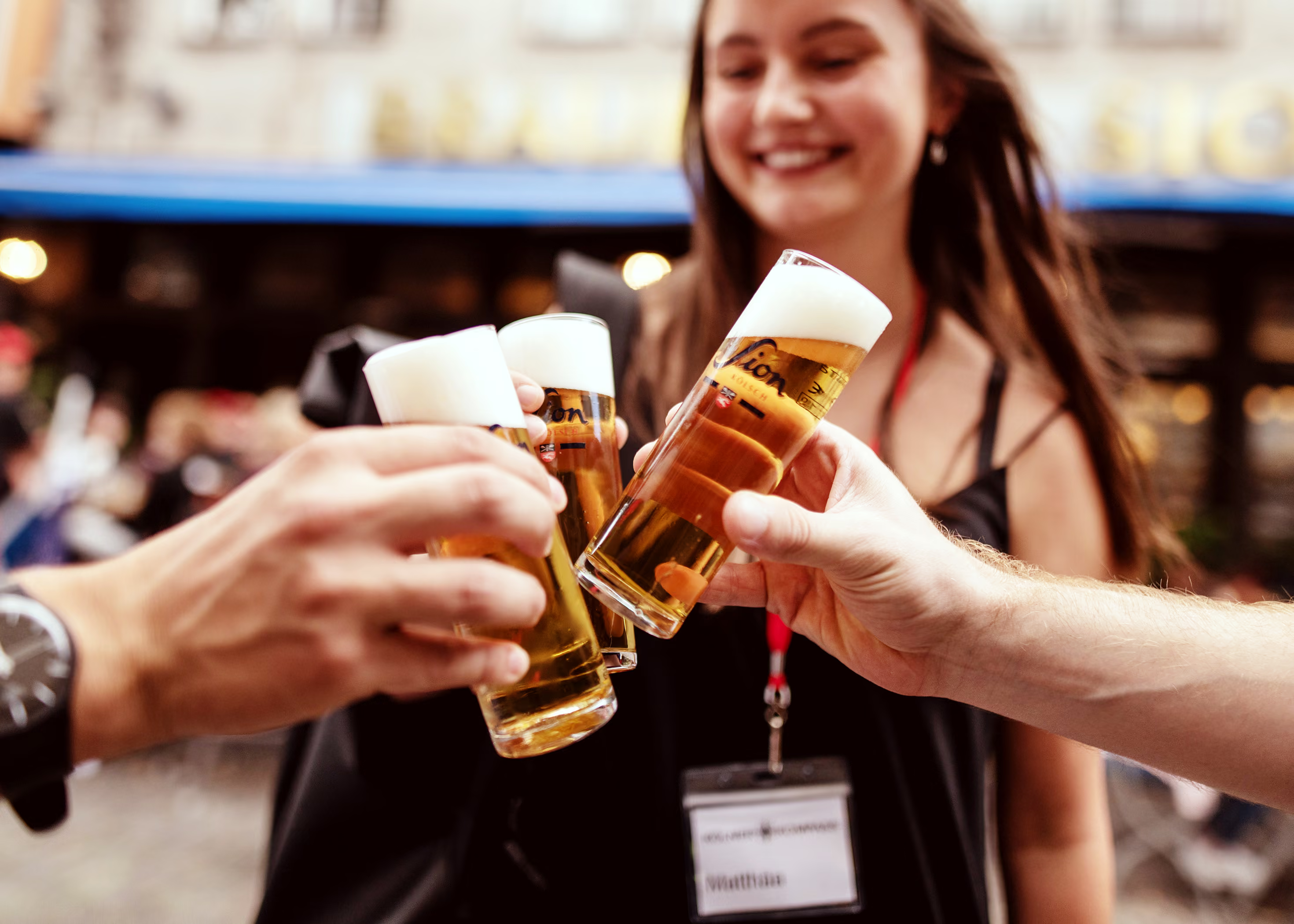
You sit down in a traditional Brauhaus, order a Kölsch, and suddenly a slim little 0.2 liter glass appears in front of you.
At first, it almost feels too small. A few Kölsch later, it starts to make perfect sense.
During our Kölner Kompass Brewery Tours, this is actually one of the questions we hear most often from international guests. And once people experience a real Brauhaus for themselves, the answer suddenly becomes very obvious.
Kölsch is traditionally served in small glasses because it tastes best fresh, cold and with a stable foam head. Kölsch is also a relatively delicate beer and loses its freshness faster than many visitors expect. That means it can become flat surprisingly quickly if it sits around too long.
The small glass solves exactly that problem.
Instead of drinking one large beer that slowly gets warm and loses freshness, you simply receive several fresh Kölsch throughout the evening.
That is why many Cologne locals would always prefer five fresh Kölsch over one giant beer.

Why does the Köbes keep bringing new Kölsch?
In many traditional Brauhäuser, you do not constantly reorder manually.
The Köbes, the traditional Brauhaus waiter, usually brings a new Kölsch automatically once your glass is empty. If you are finished, you simply place your beer coaster on top of the glass.
For many international guests during our Kölner Kompass Brewery Tours, this is one of the moments when the whole Brauhaus system suddenly starts to make sense.
The small glasses keep the Kölsch fresh. The Köbes keeps the evening moving. And the beer coaster quietly controls the whole system.
Simple. Fast. Very Cologne.
The small glass changes the atmosphere
The famous 0.2 liter Kölsch glass is not only about beer quality. It also completely changes the social atmosphere inside a Brauhaus.
Because the glasses are small, the Köbes comes by more often. Conversations continue naturally. Nobody sits in front of the same warm beer for an hour.
In Cologne, Brauhaus culture was never really about drinking the biggest beer possible. It was always more about keeping the evening moving.
At some point during the evening, the table is suddenly full of Kölsch glasses, shared food and louder conversations than before. That is usually the moment when guests stop trying to understand the Brauhaus and simply start enjoying it.
Many international guests initially laugh about the small glasses. Two hours later, they usually stop noticing the size completely.
Another reason the small Kölsch glasses work so well in a busy Brauhaus is the traditional round tray used by the Köbes to carry multiple glasses at once. Once you see a Köbes moving through a crowded room with fresh Kölsch for half the tables, the whole system suddenly feels surprisingly efficient.
Can you get Kölsch in larger glasses?
Yes, sometimes.
In outdoor beer gardens or more tourist-oriented bars, Kölsch may occasionally be served in 0.3 or 0.4 liter glasses, partly because longer walking distances for the service staff simply make the traditional 0.2 liter system less practical.
But inside a traditional Brauhaus, the classic 0.2 liter glass is still the standard.
And here is a small local hint: if you are drinking Kölsch from a large Pilsner glass or even a half-liter mug, you are probably no longer in one of Cologne’s more traditional Brauhäuser.
Why the small Kölsch glass belongs to Cologne
The small Kölsch glass fits Cologne perfectly.
It is social, practical and unpretentious. It keeps people talking, keeps the Kölsch fresh and somehow turns a simple beer order into a whole evening.
That is exactly what many guests experience during a Kölner Kompass Brewery Tour. You do not just learn why the glasses are small. You experience why the whole Brauhaus culture works the way it does.
And after a few fresh Kölsch in a real Brauhaus, most visitors understand very quickly why Cologne never needed giant beer mugs in the first place.
If you want to experience the Kölsch culture yourself, a Kölner Kompass Brewery Tour is probably the easiest way to understand why Cologne’s Brauhäuser work so differently from almost anywhere else in Germany.
Ready when you are!
We look forward to exploring historic breweries, hearing stories about Cologne, and enjoying freshly tapped Kölsch with you.

Related posts
What else is going on in Cologne!

Join the Tour