.svg)
When Can a Beer Legally Be Called Kölsch?

When Can a Beer Legally Be Called Kölsch?
A beer can be called Kölsch if it meets the official characteristics of the style and is produced within the protected geographical area.
Kölsch is therefore more than a type of beer. The name is registered as a Protected Geographical Indication within the European Union. This means that not every pale, top-fermented beer can be marketed as Kölsch. Both the way it is made and its geographical origin matter.
As guides specialising in Cologne brewery tours, we explain these rules in the place where Kölsch culture is still part of everyday life: the traditional brewhouses of Cologne’s Old Town.

What Characteristics Must a Kölsch Have?
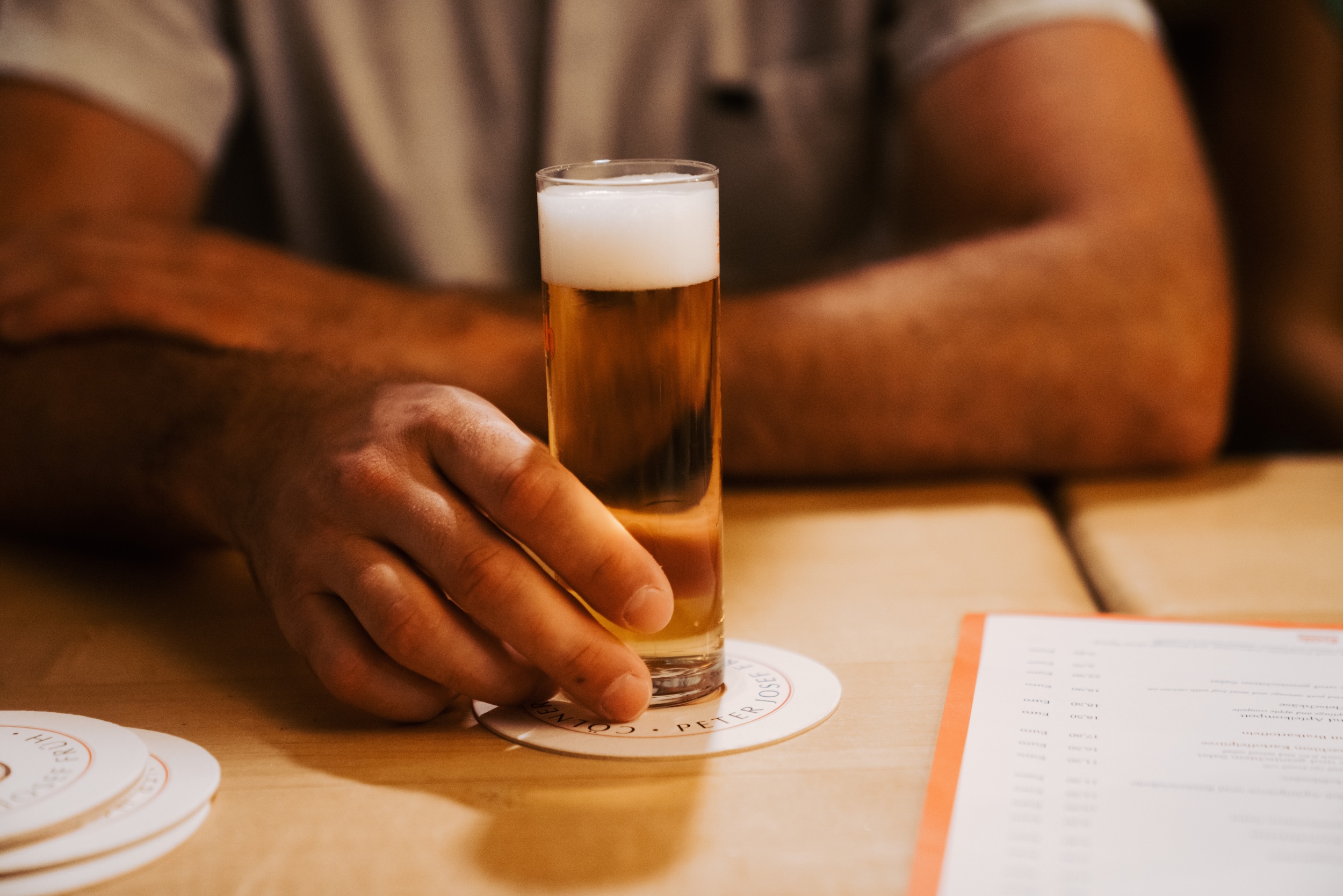
A Kölsch must be pale, top-fermented, clear, well attenuated and noticeably influenced by hops. It is brewed from malt, hops, water and top-fermenting yeast in accordance with German brewing requirements.
Top-fermented refers to the yeast and fermentation method used to produce the beer. Clear means that a Kölsch is filtered rather than naturally cloudy. Well attenuated means that only a small amount of residual sugar remains after fermentation.
Even with these shared characteristics, not every Kölsch tastes the same. Each brewery uses its own recipe. Some Kölsch beers are mild and smooth, while others taste drier, maltier or slightly more bitter.
Does Kölsch Have to Be Brewed in Cologne?
No. The legally defined geographical production area does not end at Cologne's current city limits. It includes the city of Cologne as well as the municipalities of Bedburg, Bonn, Brühl, Dormagen, Frechen, Leverkusen, Monheim and Wiehl.
However, this does not mean that Kölsch is currently brewed in all of these locations. Today, the best-known Kölsch breweries are located primarily in Cologne, Brühl and Wiehl.
Being brewed in one of these places alone is not enough for a beer to be marketed as Kölsch. It must also comply with all the quality requirements and production standards set out in the protected product specification.
In short, Kölsch is closely associated with Cologne. However, the legally protected geographical production area also includes several neighbouring towns and cities.
Is Every Pale, Top-Fermented Beer a Kölsch?
No. The brewing method alone is not enough.
A brewery outside the protected area can produce a pale, top-fermented beer that tastes similar to Kölsch. That does not automatically allow the brewery to sell it under the protected name.
Descriptions such as “Kölsch style” or “Kölsch type” are not automatically permitted either. The exact name, packaging and overall presentation of the product may all be relevant.
This is one reason why breweries outside the protected area often use more general descriptions such as “Cologne-style ale”, depending on the market in which the beer is sold.
Can an Alcohol-Free Beer Be Called Kölsch?
Yes. The official product specification explicitly includes low-alcohol and alcohol-free Kölsch.
These versions must meet the relevant requirements for Kölsch and must be produced within the protected geographical area. To make alcohol-free Kölsch, some or nearly all of the alcohol is removed after the beer has completed fermentation.
This processing step must also take place within the protected area.
What Is the Kölsch Convention?
The Kölsch Convention is an important historical basis for the protection of Kölsch.
Cologne’s Kölsch brewers used the Convention to define the characteristics of the beer and its connection to the region. It was adopted in 1986 as a common set of competition rules.
The name may sound like a conference or public event in English, but the Kölsch Convention is actually a written agreement between breweries.
Today, the legal protection of Kölsch is based on its European registration and the corresponding official product specification.
What Happens If Another Beer Uses the Name Kölsch?
The use of the name may be challenged. Depending on the individual case, a producer or retailer could be required to stop selling the beer under that name or to rename the product.
The protection is not necessarily limited to the exact word “Kölsch”. Names and designs that clearly refer to Kölsch may also be examined. The outcome always depends on the wording, presentation and circumstances of the individual case.
One well-known example involved an Austrian beer called “Sölsch”. In 2022, the state of North Rhine-Westphalia prohibited retailers from offering the beer under that name in the state or delivering it there. The responsible authority considered the similar-sounding name an unlawful reference to the protected designation Kölsch.
The decision also indicated that the beer could continue to be sold under a different name after being relabelled.
The case shows how far the protection of the name can extend. It does not mean that every similar-sounding name is automatically unlawful. Each case must be assessed individually.
Where Can You Experience Kölsch Today?
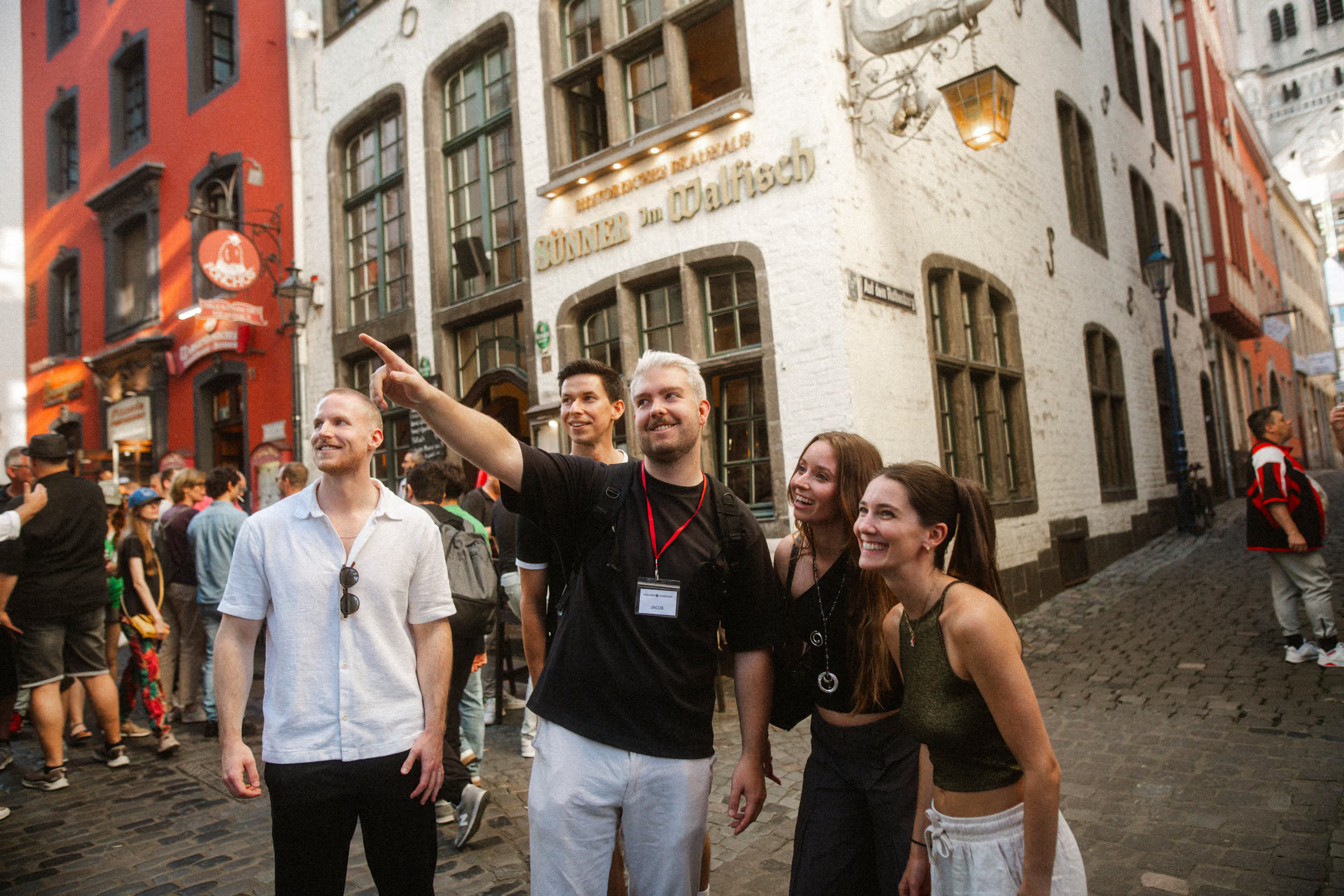
The best place to understand Kölsch is where it is served and lived: in the traditional brewhouses of Cologne’s Old Town.
A Cologne Brauhaus is more than a pub. It is a traditional brewery tavern with its own customs, local dishes and a distinctive style of service.
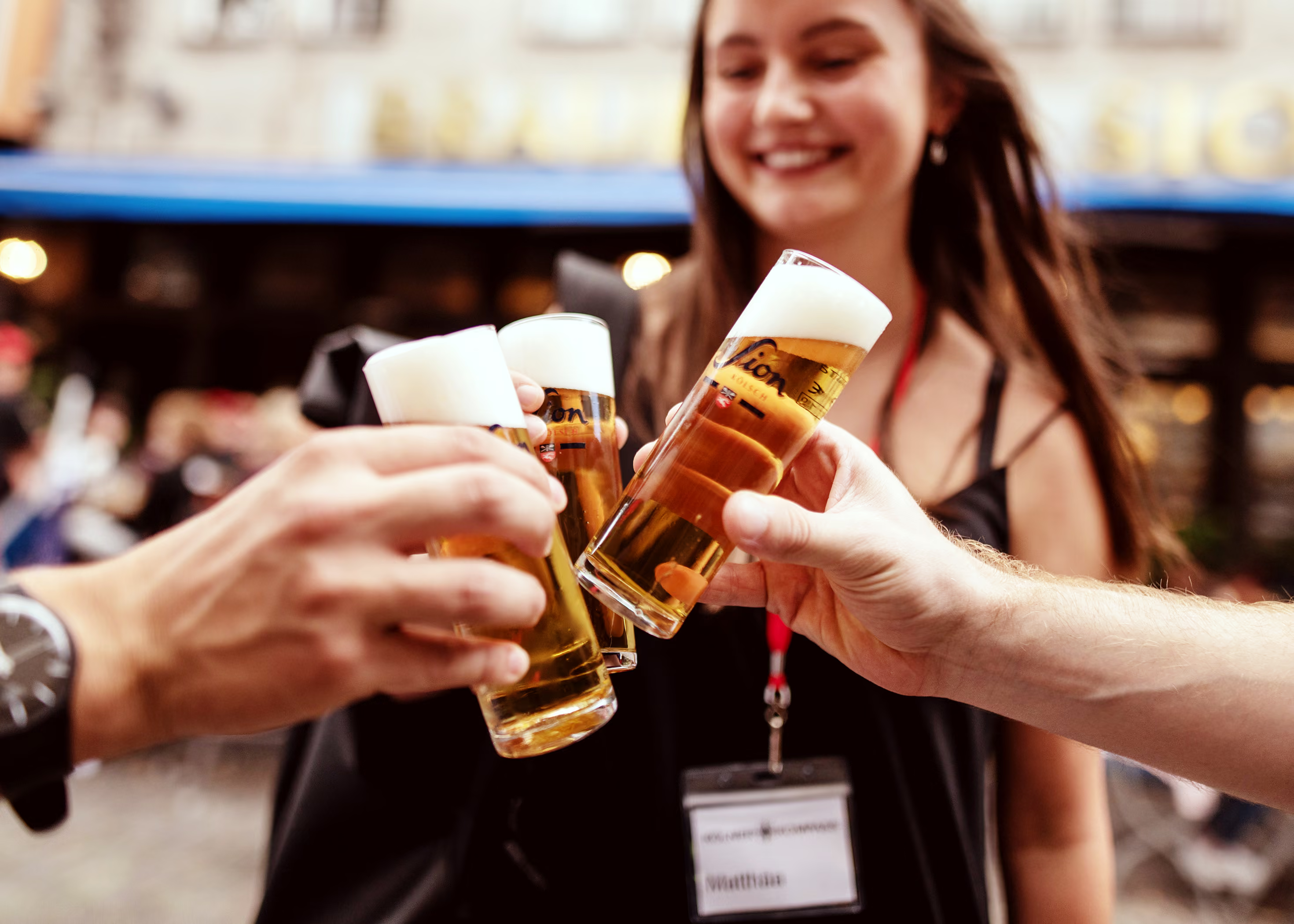
On many of our brewery tours, we visit Brauhaus Sion on Unter Taschenmacher. Hans Sion is closely associated with the development of the Kölsch Convention and is widely regarded as one of its pioneers.
Along the way, we also pass a replica of the Convention where our guests can read the original wording for themselves. It shows just how carefully Cologne’s brewers defined what Kölsch should be.
Of course, our tours are not only about rules. We visit different brewhouses, taste several Kölsch brands and share the stories behind the breweries, traditions and people who shaped Cologne’s beer culture.
Anyone who wants to do more than simply drink Kölsch can discover its story on a brewery tour with Kölner Kompass.
FAQs
A beer can be called Kölsch if it meets the official product requirements and is produced within the protected geographical area. The name is protected as a geographical indication in the European Union.
Kölsch must be pale, clear, top-fermented, well attenuated and hop-influenced. It is brewed according to German brewing requirements.
Not exclusively. The protected production area includes Cologne and several historically connected locations in the surrounding region.
No. The beer must also meet all official requirements and be produced within the protected geographical area.
Yes. Alcohol-free Kölsch is permitted if it meets the relevant requirements and is produced and processed within the protected area.
The Kölsch Convention is a written agreement adopted by Kölsch brewers in 1986. It defined shared rules for the beer’s characteristics and geographical connection.
Ready when you are!
We look forward to exploring historic breweries, hearing stories about Cologne, and enjoying freshly tapped Kölsch with you.

Related posts
What else is going on in Cologne!

Join the Tour